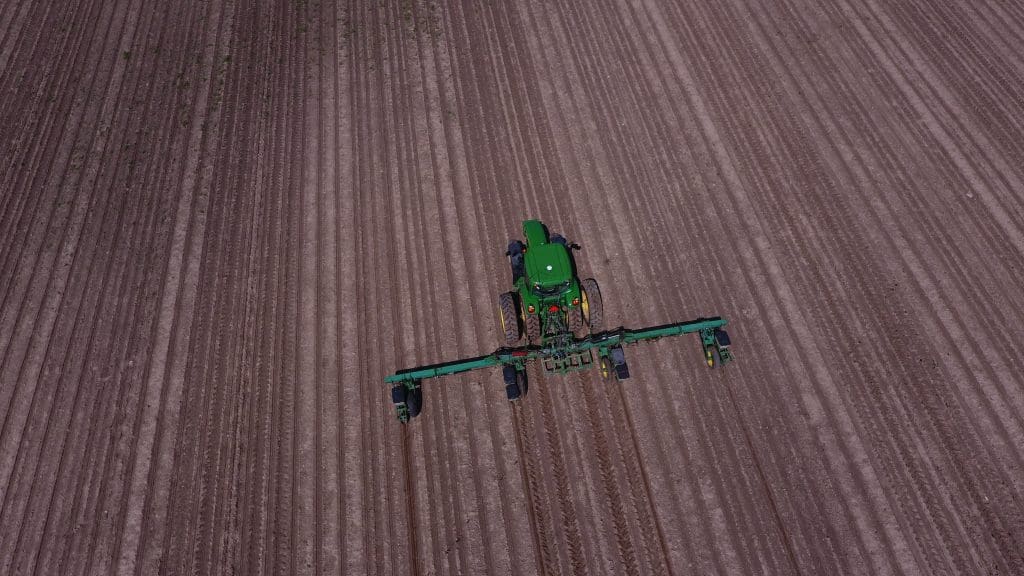
On July 8, 2026, the Federal Trade Commission (FTC), joined by five states, announced that a settlement had been reached in an antitrust lawsuit brought against agricultural equipment manufacturer Deere & Company (Deere). In January of 2025, the FTC filed a complaint against Deere which alleged the company had engaged in anticompetitive business practices with its repair restrictions. Now, the parties have reached a settlement which the FTC claims will “ensure farmers can enjoy the right to repair their own John Deere tractors and farm equipment.” This article will discuss the case, the settlement, and what it means for agricultural producers. Note, the settlement still requires final court approval before becoming effective. Additionally, this suit is unrelated to the ongoing litigation concerning Deere’s repair restrictions on its line of construction and forestry equipment. To learn more about that suit, click here.
Background
In the original complaint, the FTC, Minnesota, and Illinois alleged that Deere had violated both state and federal antitrust law. Antitrust laws are intended to prevent anticompetitive business practices and monopolization. A monopoly occurs when a business can set prices or exclude competition in its market. The complaint asserted violations of the Federal Trade Commission Act and Section 2 of the Sherman Act. The Federal Trade Commission Act prohibits “unfair methods of competition in or affecting commerce, and unfair or deceptive acts or practices in or affecting commerce.” 15 U.S.C. § 45(a) (2004). Section 2 of the Sherman Act prohibits any attempt to “monopolize any part of the trade or commerce among the several States.” 15 U.S.C. § 2 (2004).
According to the FTC, Deere violated the above-mentioned antitrust laws through its repair restrictions. Deere’s agricultural equipment has become increasingly reliant on electronic components and digital software, which can prevent simple mechanical repairs. This means that certain digital repair resources are required to diagnose problems and perform repairs. However, those repair resources are often provided only to Deere’s authorized repair providers. Without access to certain repair resources, farmers are unable to interface with Deere systems and perform their own repairs. Likewise, farmers are unable to turn to independent repair providers (IRPs) because Deere’s authorized dealers maintain exclusive access to their full suite of resources. The FTC asserts that this exclusivity “forces farmers to turn to Deere for critical repairs rather than complete the repairs themselves or choose an IRP that may be cheaper, closer, faster, or more trusted.” This assertion forms the core of the FTC’s complaint that Deere has stifled competition and monopolized the repair market for its equipment. For a full analysis of the FTC’s complaint, click here.
In the original complaint, the plaintiffs included the FTC, Illinois, and Minnesota. However, an amended complaint filed in February of 2025 added Arizona, Michigan, and Wisconsin as co-plaintiffs. Now, over a year later, the parties have agreed to a settlement which contains sweeping changes to Deere’s repair practices.
Key Settlement Definitions
The settlement defines several terms which are necessary to understand its scope. First, “Deere Agricultural Equipment” is defined as “any past, current, or future product manufactured or sold by Deere for use in farming or other forms of agriculture that depends for its functioning, in whole or in part, on digital electronics embedded in or attached to it.” This includes any Deere implements or vehicles “primarily designed for use in an agricultural operation.” Agricultural equipment does not include “motor vehicles designed and sold primarily for passenger or property transportation on public roadways.”
Next, it is important to define the “repair resources” covered by this settlement. According to its text, “repair resources” include the John Deere Operations Center PRO Service (PRO Service) and “each of the functions and capabilities, whether onboard or remote, (1) listed in Appendix A, as applicable, or (2) reasonably necessary to maintain, diagnose, and repair Deere Agricultural Equipment.” According to Deere’s website, the PRO Service is a subscription-based digital resource that allows owners to diagnose equipment using both online and offline diagnostic data.
The list of repair resources contained in Appendix A is substantial, but several entries are worth discussing. For example, Appendix A includes the “viewing and searching of DTAC solutions.” DTAC is the Dealer Technical Assistance Center and it provides both established solutions to common problems with Deere equipment and a “helpdesk” where problems can be submitted to Deere engineers for aid. Previously, DTAC was only accessible through the fully functional repair tool, which itself was only made available to authorized Deere dealers. Other notable terms under Appendix A include the viewing of operator and technical manuals, programming, reprogramming, and reinstallation of Embedded Software; and the ability to perform reprogramming and diagnostics in offline mode.
Finally, it is important to discuss how this settlement defines “fair and reasonable terms.” This definition will provide important context for several of the settlement’s provisions. When determining “fair and reasonable terms”, the following seven factors will be considered: (1) the net cost (accounting for any discounts, rebates, or other incentive programs) to a Deere Dealer, for similar items obtained from Defendant; (2) the cost to Defendant of preparing, maintaining, and distributing the item; (3) the price charged by other manufacturers of agricultural equipment for similar items; (4) the ability of Owners and IRPs to afford the item; (5) the means by which the item is distributed; (6) the extent to which the item is used, which includes the number of users, and frequency, duration, and volume of use; and (7) inflation.
What the Settlement Does
A settlement is an agreement between parties, like a contract, where both parties provide something of value. Here, Deere agrees to alter its repair restrictions and provide compensation. The plaintiffs are agreeing to release Deere from all claims that they “brought or could have brought against Deere arising from the specific events giving rise to the allegations described in the Complaint.” In more basic terms, the plaintiffs are agreeing to release Deere from liability for the alleged violations asserted in the complaint. Like a contract, both parties are providing or giving up something of value. Additionally, settlements are enforceable by the court. Here, Deere has agreed to several provisions which will significantly change how repairs of Deere equipment may occur.
The settlement between Deere and the FTC will be effective for a period of 10 years. This duration is identical to the requirements of a recent settlement between Deere and a group of farmers. In that case, the farmers’ claims were similar to the FTC’s claims. The settlement between Deere and the group of farmers also promised changes to Deere’s repair practices, but that agreement will operate independently of the agreement between Deere and the FTC. Deere’s settlement with the FTC contains a provision which states “no agreement, understanding, representation, or interpretation not contained in this Stipulated Order may be used to vary or contradict the terms hereof.” To learn more about the settlement between Deere and the group of farmers, click here.
Under its settlement with the FTC, Deere is required to “make available to every Owner and IRP on Fair and Reasonable Terms, on a license, subscription, or purchase basis, Repair Resources equivalent to those Deere then makes available to Deere Dealers, subject to the Rollout Schedule.” This would mean that both Owners and IRPs would now have access to the full suite of repair resources previously provided solely to authorized Deere dealers. The Rollout Schedule requires most repair resources to be made available on the date of the stipulated order, which is July 8, 2026. However, under the Rollout Schedule, select resources will be provided between August 1 and December 31 of 2026. For example, the capability of Deere owners to receive “Deere Machine Health Insights” will be provided on December 31. Similarly, the ability to perform “offline mode” reprogramming and diagnostics will be provided on December 31. While the Rollout Schedule does provide certain exceptions, most provisions are required to be implemented on the date the settlement is entered by the court.
The settlement also contains a provision for “future repair resources.” This includes any future products, updates, or upgrades to existing repair resources. It also includes any repair resources which are “reasonably necessary to diagnose, maintain, update, or repair Deere Agricultural Equipment.” A repair resource is “reasonably necessary” when a piece of agricultural equipment “will not operate in fully functional condition” without access to that resource. Under the terms of the settlement, these future repair resources must also be provided to owners and IRPs “as soon as access is granted to over 50 percent of Deere Dealer locations in the United States.”
For both repair resources and future repair resources, Deere will be required to instruct its authorized dealers to “promote and support” those resources. Deere’s dealers will also be required to sell the future resources to owners and IRPs upon request “regardless of whether the Owner or IRP purchases repair services from the Deere Dealer.” In addition to promoting the repair resources, Deere dealers are prohibited from discriminating or retaliating “in any way, including in the sales, financing, or servicing of Deere Agricultural Equipment, tools or parts,” against both owners and IRPs. The agreement stipulates that any license, subscription, or purchase of repair resources does not include a transfer of ownership rights to Deere’s intellectual property. Finally, the settlement allows Deere to condition the use of its repair resources by IRPs on obtaining an Owner’s express or implied consent but notes that Deere may not “impose unreasonable barriers or conditions to obtaining such consent.”
Enforcement and Notice
When discussing any settlement, it is important to discuss how its terms will be enforced. Like a contract, a settlement will typically be enforceable by the court. The settlement here contains several provisions outlining how its terms will be enforced. Under the terms of the settlement, the FTC and plaintiffs have the right to seek an order of contempt from the court. A party is “in contempt” of the court when it has disobeyed a court order. If Deere is found to be in contempt of this order or otherwise violates its terms, the FTC and plaintiffs have several remedies available.
For example, if the court finds that Deere has violated the terms of the settlement, the plaintiffs may petition the court for an extension of the order. As stated above, the settlement is to be effective for a period of 10 years before it terminates. However, the plaintiffs may also provide evidence of a pre-expiration violation of the settlement for up to 4 years after it expires. If the court finds that Deere did in fact violate the settlement, it may extend the settlement for an additional term at least 4 years. This means that violations occurring before the settlement expires may still be brought to the court for up to 4 years after the settlement expires. In addition to extending the settlement, the plaintiffs may seek “additional relief” to ensure Deere’s compliance, as well as fees and expenses. The settlement does not specify any particular amount of damages in the event of a violation.
Under the terms of the settlement, certain notice requirements have also been imposed on Deere. Within 30 days of the settlement’s entry, Deere must post notice of the settlement on its website. This notice must contain a link to the text of the settlement, which can be found on the FTC’s website. Additionally, the notice must contain a link to Appendix C of the settlement. Appendix C contains a pre-written letter which outlines the details of the settlement. Deere is required to send this notice to its authorized dealers, as well as owners and IRPs who have purchased equipment, parts, or repairs from Deere in the last 3 years.
Conclusion
The FTC’s case against Deere heavily scrutinized the company’s repair practices and called for a total overhaul of its repair restrictions. Now, this settlement purports to do exactly that. Deere will now be obligated to provide its full suite of repair resources to both owners and IRPs, while also ensuring that future resources are made available. For farmers in the U.S., this should result in greatly increased freedom when performing repairs. Rather than being required to turn to Deere’s authorized dealers, owners will now be able to perform their own repairs or seek repairs from IRPs. For more information, impacted parties should be on the lookout for the notices described above.