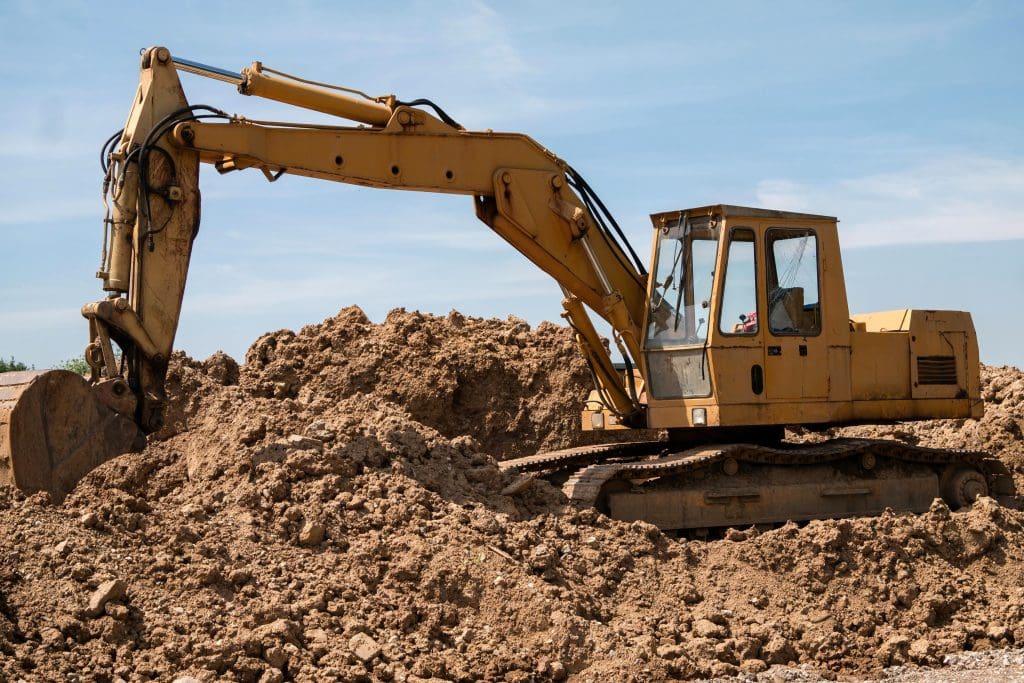
On May 14, 2026, an Illinois-based landscaping company filed a class-action lawsuit in a federal court against equipment manufacturer John Deere & Company (“Deere”) over repair restrictions tied to its construction and forestry (C&F) equipment. The complaint alleges multiple violations of federal antitrust law, which is intended to prevent companies from using unfair business practices to limit competition. This article will discuss those allegations, the relief being sought, and what it could mean for Deere’s C&F customers.
Background
The plaintiffs claim Deere violated both Sections 1 and 2 of the Sherman Act (15 U.S.C. § 1, 2), a major federal antitrust law Antitrust laws endeavor to keep markets competitive and prevent companies from unfairly controlling prices or shutting out competitors. Section 1 of the Sherman Act prohibits two or more individuals or entities from entering into a contract or conspiracy that restrains trade. Rather than banning one specific practice, the law broadly targets agreements that affect prices, output, or access to a market. One example is a group boycott, which happens when businesses agree not to deal with certain people or companies. Another example would be a tying arrangement. A tying arrangement happens when a company uses control over one product or service to pressure customers into buying a different product. These examples are relevant here, as both are included in the allegations against Deere.
Section 2 of the Sherman Act prohibits monopolization and any attempts to monopolize. According to the FTC, monopolization occurs when a company gains significant market power and uses exclusionary practices to block competition. For example, a firm could be exercising monopoly power when it has created high barriers to entry for other competitors. A firm could accomplish this by creating high startup costs for similar products or by possessing exclusive patents on technology and processes.
Proving monopolization is often difficult. In United States v. Grinnell Corp., the Supreme Court held that a claim under Section 2 of the Sherman Act requires two elements: (1) the possession of monopoly power in the relevant market and (2) the willful acquisition or maintenance of that power as distinguished from growth or development as a consequence of a superior product, business acumen, or historic accident. 384 U.S. 563 (1966).
Put simply, a business must intentionally engage in anticompetitive conduct. Having a better product or being more successful than competitors, by itself, is not enough to establish a monopoly. In Costar Group, Inc. v. Commercial Real Estate Exchange, Inc., the Ninth Circuit held that for both monopolization and attempted monopolization claims, “plaintiffs must then plausibly allege that the defendant engaged in anticompetitive conduct to achieve (or attempt to achieve) monopoly power and caused antitrust injury.” 150 F.4th 1056 (9th Cir. 2025).
In practice, proving that a company’s conduct was intentionally anticompetitive, rather than motivated by legitimate business reasons, can be a significant hurdle for plaintiffs.
To better understand the allegations, it helps to first look at Deere’s repair practices. Modern Deere C&F equipment relies heavily on computerized systems, meaning repairs often require specialized software and hardware. One key piece of technology mentioned throughout the complaint is the “Fully Functional Tool.” The Fully Functional Tool allows users to connect to Deere equipment, which then allows them to diagnose problems, run tests, perform calibrations, and install replacement parts. According to the lawsuit, only authorized Deere dealers can access this tool. As a result, equipment owners must often rely on Deere dealers for anything beyond basic mechanical repairs. That restriction sits at the center of Deere’s ongoing repair controversies for both agriculture and C&F equipment.
Deere has faced growing criticism in recent years over repair restrictions tied to its agricultural equipment. Most notably, the company recently agreed to a settlement that would remove many repair restrictions for its large agricultural machines. That settlement followed nearly four years of litigation that began when a group of farmers filed an antitrust class action against Deere. In 2025, the Federal Trade Commission (“FTC”) filed suit against Deere over those same repair restrictions. Both the farmers’ lawsuit and the FTC complaint focused on Deere’s agricultural equipment. This new case centers on Deere’s construction and forestry (“C&F”) equipment. According to the complaint, “few have noted the impact of similar anticompetitive restrictions” on Deere’s C&F equipment.
In the cases brought by the FTC and the group of farmers, Deere was similarly accused of violating the Sherman Act through alleged anticompetitive behavior and monopolization. As is the case here, the farmers and the FTC both focused on the exclusivity of Deere’s repair tools, like the Fully Functional Tool. Additionally, the FTC and farmers challenged the relationship between Deere and its authorized dealers, which will be discussed in the context of this case below.
As of the time of writing, Deere has yet to file an answer to the complaint discussed here. Because of this, Deere’s responses and defenses in this specific case are still unknown. However, the complaint here is quite similar to both the FTC’s complaint and the suit brought by the private farmers. In response to the FTC complaint, Deere denied all alleged violations. In that answer, Deere asserted that it had an “independent and legitimate business interest” in its conduct. When a business is accused of monopolization, one valid defense is to assert that the challenged conduct was for legitimate reasons. If a company is merely trying to improve its operations for example, and not eliminate rivals, it may not be considered anticompetitive behavior.
In response to the FTC complaint, Deere asserted several justifications for its challenged conduct. Deere claimed that its conduct was “at all times procompetitive.” According to Deere, its repair restrictions were intended to safeguard customer safety, security, and the environment. The company asserts that it was “creating a market for others” (in regard to its authorized dealers) that would not otherwise exist. However, it is again worth noting that these defenses were in response to the FTC’s suit, which concerned Deere’s agricultural equipment. Deere has yet to respond to the complaint discussed in this article.
This case focuses on Deere’s C&F equipment and seeks to certify C&F equipment owners as a class. More specifically, the proposed class would include people and businesses in the United States who, from May 14, 2022, to the present, purchased restricted Deere C&F repairs or Deere C&F replacement parts connected to those repairs from Deere or an authorized Deere dealer. Class certification is necessary for the case to proceed as a class action. If the court approves certification, those individuals and businesses would become part of the class. With that in mind, this case should be of particular interest to owners of Deere’s C&F equipment.
The Complaint
In the complaint, the plaintiffs first allege that Deere has “willfully maintained monopoly power in the aftermarket for Restricted Deere C&F Repairs” through “a coordinated and multifaceted exclusionary scheme.” In simpler terms, they claim Deere controls the repair market by preventing independent repair providers (IRPs) and equipment owners from accessing the tools needed to complete repairs. The complaint points to Deere’s licensing practices as the root cause of this issue.
According to the plaintiffs, Deere licenses the Fully Functional Tool exclusively to authorized dealers and prohibits those dealers from sharing or sublicensing the tool to independent repair shops or equipment owners. The plaintiffs claim these restrictions effectively force owners to use Deere dealers for repairs and related replacement parts.
Because customers have limited repair options, the plaintiffs allege that Deere has the power to control pricing and restrict competition in the market. The lawsuit also argues that Deere cannot justify these restrictions as necessary or reasonable business practices. The plaintiffs claim Deere could still protect its technology and intellectual property through less restrictive licensing options, such as commercially reasonable subscriptions for owners and IRPs. Instead, they argue Deere’s current system is designed primarily to maintain its dominance over the repair market.
Next, the complaint asserts that Deere has engaged in a group boycott alongside its authorized dealers. According to the complaint, Deere worked with its authorized dealers to “deny access to the necessary Fully Functional Tool to anyone outside the authorized Deere Dealer network.” This includes IRPs and owners of Deere C&F equipment. The plaintiffs assert that this collusion has “the effect of artificially raising, fixing, maintaining, and/or stabilizing prices in the Restricted Deere C&F Repairs aftermarket” in violation of Section 1. According to the complaint, limiting access to the Fully Functional Tool leaves owners with fewer repair choices and forces them to pay higher prices through Deere’s authorized dealer network.
Finally, the plaintiffs claim that Deere has engaged in unlawful tying arrangements. The plaintiffs argue Deere uses the Fully Functional Tool to steer customers toward Deere repair services and Deere replacement parts. According to the complaint, Deere uses its control over the tool to push owners into buying Deere-approved repairs and the parts tied to those repairs.
This claim goes back to the central issue in the lawsuit, which is that the Fully Functional Tool is necessary for many repairs, and only authorized Deere dealers can use it. The plaintiffs argue that in a competitive market, owners and IRPs would be able to license the tool themselves. That access would allow owners to repair equipment themselves or to turn to IRPs. Instead, customers allegedly have little choice but to rely on Deere dealers. The complaint claims this system also creates a second tying arrangement involving Deere replacement parts.
According to the plaintiffs, Deere’s control over repairs effectively forces customers to buy Deere-branded replacement parts as well. The complaint states that Deere dealers are required to “actively and aggressively promote” Deere replacement parts. The agreements also reportedly require dealers to exclusively use Deere-branded parts repairs. As a result, owners are unable to use lower-cost aftermarket parts because authorized dealers are not allowed to install them. The complaint claims Deere replacement parts are generally more expensive than comparable aftermarket options. The plaintiffs argue that, in a more competitive market, owners and IRPs would have greater freedom to source parts from competing suppliers. Instead, the lawsuit claims Deere’s system forces customers to pay artificially inflated prices for replacement parts they are forced into buying.
Remedies Sought
The plaintiffs here have petitioned the court for a permanent injunction that would prevent Deere from “continuing to engage in the anticompetitive conduct described above.” While broad, the request is not without precedent. As discussed earlier, Deere recently agreed to a proposed settlement involving its agricultural equipment that would remove many repair restrictions and make repair tools, including the Fully Functional Tool, available to owners and IRPs through a subscription service. That settlement, however, applied only to Deere’s agricultural equipment. In the present case, the plaintiffs are seeking similar changes for Deere’s C&F equipment.
The plaintiffs are also seeking monetary damages for both themselves and the proposed class. In Deere’s earlier agricultural equipment settlement, the company agreed to pay $99 million to eligible class members. Like the proposed class here, that earlier class included customers who purchased Deere repair services or replacement parts during a defined time period. Whether such an outcome will occur in this case remains unclear.
Conclusion
As of the time of writing, this case is still in its early stages and class certification is an obstacle that the plaintiffs’ counsel must clear. The Deere settlement for large agricultural equipment discussed throughout this article came after class certification and nearly four years of litigation. With that in mind, it may be some time before concrete outcomes are reached in this current case. Regardless, owners of Deere C&F equipment will likely have a substantial interest in the outcome. For updates on this litigation, be on the lookout for future NALC resources.
To read the full text of the Sherman Act, click here.
To read the proposed settlement agreed to by Deere, click here.
To read the FTC’s complaint against Deere, click here.