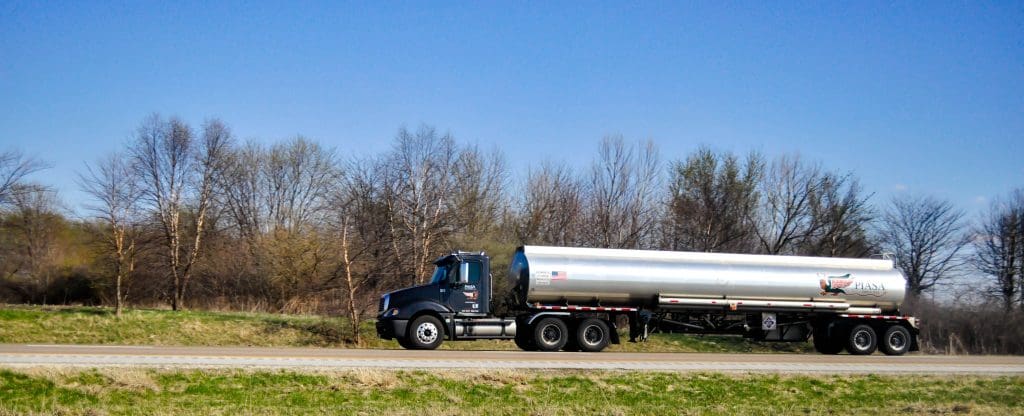
In September 2026, the average price for a gallon of diesel in the United States rose to $6.53, according to the United States Energy Information Administration (EIA). These higher diesel prices stem from multiple factors, including foreign conflicts and disruptions to global supply chains. Regardless of the cause, the effects of higher diesel prices are impacting the American agricultural industry to a great degree. Every facet of the agricultural industry, from production to distribution, relies heavily on the use of diesel fuel. As a result, many farmers in the U.S. are struggling to offset the rising cost of diesel fuel. To remedy these higher prices, some states and the federal government are implementing emergency measures to alleviate the strain being felt by members of the agricultural industry. State actions vary, but generally focus on allowing agricultural producers to use dyed diesel on highways. This article will discuss those recent efforts to combat increased diesel prices and how they function.
What is Dyed Diesel?
Two types of diesel are sold for use in motor vehicles and equipment in the United States. “Clear diesel” is diesel that can be used for any type of equipment, at any place, for use anywhere. “Dyed diesel,” on the other hand, contains a red dye that identifies it as fuel subject to different federal and state tax treatment and use restrictions. The red dye indicates the difference between the two- specifically, gallons of clear diesel have had federal and state taxes paid, while red diesel has not.
Federal taxes on a gallon of diesel total 24.4 cents per gallon. Of that, the vast majority- 24.3 cents- is allocated to the Highway Trust fund to finance transportation infrastructure and maintenance. This is a significant amount. In fact, according to the Federal Highway Administration, approximately 91% of the funds in the Highway Trust Fund come from fuel taxes.
State taxes on diesel fuel vary. They can include excise taxes (typically used for road maintenance), sales taxes or environmental taxes, among others. According to the EIA, state taxes add an additional 35.5 cents per gallon, on average.
In other words, an average of 59.9 cents of the cost for a gallon of clear diesel is the federal and state tax on that diesel. Purchasing 100 gallons of diesel at $6.53 per gallon will cost $653. Of that amount, $59.90 will paid to the state and federal government for taxes, while $593.10 is the cost for the product itself.
Because the majority of those taxes are intended to improve public roads and highways, legislatures have carved out an exception for diesel used to fuel machines that do not utilize the roadways. Products under this exemption are marked with red dye to indicate that federal and state taxes have not been paid, and both state and federal law prohibits its use in vehicles driving on roadways. The dye in dyed diesel allows authorities to determine whether individuals are improperly using it in highway vehicles.
Red dye diesel is frequently used in agriculture as a more cost-effective fuel source for producers who need to supply a fleet of combines, harvesters, tractors, or other large equipment. It is also used in construction, and in some parts of the country as a source of energy for furnaces and home heating. Because dyed diesel is intended for off-road use, it is not available at most retail gas stations. Instead, it may be available at some farm-focused fuel stations, cooperatives, or delivered directly to purchasers for on-farm storage and use.
Arkansas
On September 29, 2026, Governor Sanders signed and published an executive order to allow the use of “tax-free, dyed diesel fuel” on Arkansas highways. In Arkansas, diesel taxes are currently imposed at 28.5 cents per gallon. The executive order is in effect through October 30, 2026.
According to its text, the executive order is intended to combat “an unforeseen hardship in the agriculture and forestry industries as a result of the increased price of diesel fuel.” It declares a state of emergency and invokes an Arkansas statute that allows for the suspension of “any regulatory statutes if compliance with those statutes would delay action in coping with the declared emergency.” Ark. Code Ann. § 12-75-114(e)(1). Here, Governor Sanders is suspending several regulations relating to the use of dyed diesel.
Under Arkansas law, if the Department of Finance and Administration determines that an unauthorized vehicle is using dyed diesel, the individual responsible may be fined. Ark. Code Ann. § 26-56-226(a)(1). Additionally, Arkansas law prohibits the mixing of dyed and undyed fuel in the fuel tank of any unauthorized vehicle. Ark. Code Ann. § 26-56-227(a). Under the executive order, the penalties associated with the violation of those laws are suspended with certain caveats. First, the vehicle using dyed diesel or a mixed blend must qualify as a Class 2, Class 3, Class 4, Class 5, Class 6, or Class 8 motor vehicle under Ark. Code Ann. § 27-14-601(a)(3). These classes group vehicles based on weight, ranging from 6,000 to 68,000 pounds. Class 8 specifically does not contain a weight requirement, but includes vehicles used primarily for hauling in agricultural and forestry operations. To take advantage of the EO waiver, a vehicle must be included in one of the above-mentioned classes and be owned and operated by an individual or business engaged in agricultural or forestry operations. Within those operations, the vehicle must be primarily used “for the purpose of carrying out the functions of the agricultural or forestry-related business.”
However, under this EO vehicles may not be licensed under the International Fuel Tax Agreement (IFTA). The IFTA is a tax collection agreement entered into by the 48 contiguous U.S. states, Canada, and Alaska. The IFTA allows eligible individuals and businesses to file a single fuel tax report that tracks applicable fuel taxes in all states where the individual operates. For example, an interstate carrier of agricultural products would probably be licensed under the IFTA, and thus not be able to use dyed diesel. The executive order mandates that for individuals and businesses operating qualified vehicles “within the scope and during the effective period of this Order,” no state department, agency, or officer shall assess the taxes and penalties imposed by Arkansas law.
Nebraska
On September 24, 2026, Governor of Nebraska Jim Pillen signed Executive Order No. 26-21, titled “Agricultural Diesel Fuel Supply.” Similar to the Arkansas order, Nebraska’s executive order waives the taxes and penalties associated with the improper use of dyed diesel. Nebraska has separate tax rates for clear and dyed diesel. Clear diesel is taxed at 31.8 cents per gallon, while dyed diesel is taxed at only 0.25 cents per gallon.
Under Nebraska law, any vehicle registered or required to be registered for use on the highway shall not contain untaxed diesel or diesel with “any evidence of the dye or chemical marker added . . . indicating untaxed low-sulphur or high-sulphur diesel fuel.” Neb. Rev. Stat. § 66-495.01(1). Retailers of diesel fuel are also prohibited from selling, or offering to sell, dyed diesel fuel.
The executive order prohibits any state department or agency from assessing penalties for violating the above-mentioned provisions. Dyed diesel will now be usable, penalty-free, on Nebraska highways. Additionally, this executive order will allow fuel retailers to sell dyed diesel without fear of penalty.
There is also a tax-relief option for businesses who qualify for the EO but still choose to use clear diesel. In that situation, clear diesel would be purchased and appropriate taxes paid on the gallons delivered. However, for diesel purchased between September 24, 2026 and December 23, 2026, specified diesel fuel taxes will be eligible for a refund. This includes taxes levied under select statutes and “any other applicable state statutes which incorporate tax on diesel fuel used in Nebraska to transport Nebraska-sourced agricultural products on Nebraska’s highways and public roads.” To claim these refunds, individuals or businesses will need to file a “Nebraska Ag Use Motor Fuels Tax Refund Claim” with the Nebraska Department of Revenue.
Alabama
On September 24, 2026, Alabama Governor Kay Ivey sent a letter to the Alabama Law Enforcement Agency (ALEA) with instructions to cease conducting inspections “to identify the use of dyed diesel fuel” in commercial motor vehicles. This means that, between September 24, 2026 and January 22, 2027, ALEA will no longer be inspecting vehicles for the use of dyed diesel. The letter also directs Alabama’s Commissioner of the Department of Revenue “to request dyed diesel fuel penalty relief from the Internal Revenue Service.” However, the letter does not discuss any specific details as to what that relief may entail. According to Governor Ivey, these measures are necessary to “provide meaningful relief to Alabama’s agricultural and timber industries.” Alabama currently has a state excise tax of 31 cents per gallon on regular undyed diesel fuel.
Texas
On September 28, 2026, Texas Governor Greg Abbott issued a proclamation that temporarily suspended certain Texas dyed diesel provisions. As seen in other states, this proclamation declared a state of emergency due to the ongoing shortage of diesel. Here, Texas has suspended several laws relating to dyed diesel. First, the proclamation suspends a Texas law which requires any provider, supplier, or seller of dyed diesel to include a notice stating that the dyed diesel is for “nontaxable use only.” Tex. Tax Code Ann. § 162.231. The proclamation also suspends the Texas law provision which prohibits a person from selling or holding for sale “dyed diesel fuel for any use that the person knows or has reason to know is a taxable use of the diesel fuel.” Tex. Tax Code Ann. § 162.233.
Next, the proclamation suspends its law prohibiting the use of dyed diesel on public highways. More specifically, Texas prohibits a person from operating a motor vehicle “on a public highway in this state with taxable motor fuel that contains dye in the fuel supply tank of the motor vehicle.” Tex. Tax Code Ann. § 162.235. Under the proclamation, dyed diesel will be permitted for use on Texas’ highways. It suspends the penalties associated with violations of the abovementioned provisions, which range from $25 to $200. Tex. Tax Code Ann. § 162.402. Finally, the proclamation suspends the provisions of Texas law which make the improper sale or use of dyed diesel fuel a criminal offense. Tex. Tax Code Ann. § 162.403 (6)-(7). The proclamation does not specify how long these suspensions will remain in effect.
While the proclamation allows dyed diesel to be used on highways without penalty, users are still responsible for payment of the tax not paid on the initial purchase. According to the state comptroller,
The disaster declaration effective September 28, 2026, suspends restrictions on using dyed diesel on highways. However, it does not waive the 20 cents per gallon tax owed on dyed diesel used in a taxable (on highway) manner, as required under Texas Tax Code Section 162.203. The Comptroller continues to explore options for how taxpayers can remit the tax due.
North Carolina
Similar to other states, in North Carolina it is illegal to use dyed diesel in a licensed highway vehicle. Consequences are two-tiered. Violators are subject to payment of 1) the fuel tax that should have been paid and 2) an additional penalty of the greater of $1,000 or five times the unpaid fuel tax. However, on October 1, 2026, the North Carolina Department of Revenue announced that it would be suspending penalties on the use and sale of dyed diesel until December 31, 2026. More specifically, the penalty will not be applied when “dyed diesel fuel is sold or used from bulk storage for highway use associated with farming and agricultural purposes.” According to the announcement, “farming and agricultural purposes” include crop cultivation, livestock rearing, forestry, aquaculture, and related agribusiness activities. State taxes must, however, be paid on the fuel used to operate on roadways. The proclamation makes that clear in specifying that “in the case of the operator of the vehicle in which the dyed diesel fuel is used,” relief will only be available if the operator or the person selling the fuel pays North Carolina’s state excise tax of 41 cents per gallon. In other words, North Carolina is not removing the state taxes on diesel fuel, it is only suspending the additional improper usage penalties that would have been imposed on top of the tax itself Drivers who choose to use red dye diesel in highway vehicles are responsible for paying the previously unpaid tax in order to avoid the possibility of additional penalties. In order to do so, they must file the North Carolina Department of Revenue’s Motor Fuel Backup Tax Return (GAS-1259).
Other State Changes
In addition to the actions described above, several other states have relaxed their regulations of dyed diesel. Louisiana has suspended provisions that make unlawful and penalize the use of dyed diesel on its highways, the “holding for use, or the use” of dyed diesel, and the sale of dyed diesel until October 22, 2026. Dyed diesel is exempt from Louisiana’s state tax rates, while clear diesel is taxed at a rate of 20 cents per gallon.
Missouri has suspended penalties for and allowed the use of dyed diesel on its highways, so long as the vehicles are being used for “agricultural purposes.” This includes “the harvesting, field-to-storage, or market transport of crops, livestock, and agricultural commodities.” Missouri taxes clear diesel at a rate of 29.5 cents per gallon. Missouri’s suspension will remain in effect until October 30, 2026.
Oklahoma Governor J. Kevin Stitt has requested Oklahoma agencies temporarily pause inspections for dyed diesel. More specifically, the Oklahoma Department of Public Safety and Oklahoma Corporation Commission “should refrain from initiating inspections, citations, or other enforcement actions based solely upon the presence or use of dyed diesel fuel in highway vehicles” through January 26, 2027. Oklahoma currently levies a tax of 19 cents per gallon on clear diesel. Additionally, Governor Stitt has asked the Oklahoma Tax Commission (OTC) to “immediately seek Dyed Diesel Fuel Penalty Relief” from the IRS. Note, however, that this does not permanently remove or waive state taxes owed on the diesel purchase. Not only does the request specify that the action is temporary, but Governor Stitt also tasked OTC with taking “all lawful steps available to facilitate the reporting and payment of applicable state taxes during the period of federal relief.”
Indiana has also suspended its regulations on dyed diesel. Indiana taxes add 63 cents to each gallon of clear diesel, while Indiana law prohibits the use of dyed diesel on “any public highway.” Ind. Code § 6-6-2.5-62(c). The proclamation suspends that provision until at least November 4, 2026. The executive order states that the suspension will be applied to “farmers and timber harvesters…during the duration of the energy emergency.”
Federal Action
The actions discussed above are applicable only to state laws regarding dyed diesel. Dyed diesel is also regulated federally. More specifically, federal law imposes monetary penalties, collected by the Internal Revenue Service (IRS) if an individual sells or uses dyed diesel “for a use other than a nontaxable use.” 26 U.S.C. § 6715 (a)(1)-(2). States cannot alter or circumvent these penalties, regardless of their own state law suspensions. However, on October 5, 2026, the Trump Administration published an executive order (EO) titled, “Emergency Tax Relief on Diesel Fuel.” The EO contains several measures affecting diesel users. First, the Secretary of the Treasury has been directed to defer “certain diesel fuel tax payment obligations and provide penalty relief to the extent permitted by law.” More specifically, the Secretary of Treasury is instructed to determine whether a deferral is warranted under 26 U.S.C. § 7508A, which allows for a tax deferral of up to one year “in the case of a taxpayer determined by the secretary to be affected by a federally declared disaster.” The EO mandates that if the Secretary determines a deferral is warranted, specified taxes incurred between October 5, 2026 and December 31, 2026 are to be deferred without any penalties, interest, additional amount, or addition to the tax.
Note, however, that this is a deferral of taxes owed. It does not eliminate or otherwise remove the underlying liability. A forgiveness of the liability, if considered, would have to be undertaken by Congress. The EO acknowledges this by directing the Secretary of the Treasury to issue guidance to facilitate the implementation of the order and “explore avenues, including legislation, to eliminate the obligation to pay the amounts deferred”.
The taxes at issue in the EO are the federal diesel tax and the tax covering dyed diesel used for any purpose other than a “off-highway business use.” 26 U.S.C. § 4041. Currently, that includes a federal tax rate of 24.3 cents per gallon.
Next, the EO directs the IRS to announce that it will not impose a penalty when dyed diesel fuel is sold for use or used on the highway during the period of October 5, 2026, through December 31, 2026. The penalty for the sale or use of dyed diesel for a use “other than a nontaxable use” is the greater of either $1,000 or $10 for each gallon of the dyed fuel involved. 26 U.S.C. § 6715. Finally, the EO contains additional instructions for relevant government agencies to prioritize fuel compliance resources, maintain safety on America’s highways, promote diesel access for farmers, and “engage” state governments. These final directives are less focused on specific actions, instead proposing general goals to address the ongoing diesel situation.
It is important to note, however, that the federal EO on dyed diesel does not automatically apply in every state. Instead, the exemption applies only in states where the governor has issued a proclamation adopting it or independently altering the state tax status. In states without a governor’s proclamation, regular usage requirements still apply.
Conclusion
It is important to reiterate that the actions discussed above are limited to their respective jurisdictions. States can regulate the use of dyed diesel within their borders but cannot alter the laws of other states or the federal government. Producers should also remember that these actions are intended to be temporary. Dyed diesel can leave residue in fuel tanks, even after removal. Whether the presence of that residue will lead to penalties after the suspensions have been lifted is currently unclear. These temporary measures are intended to respond to the current fuel crisis and are unlikely to be extended indefinitely.