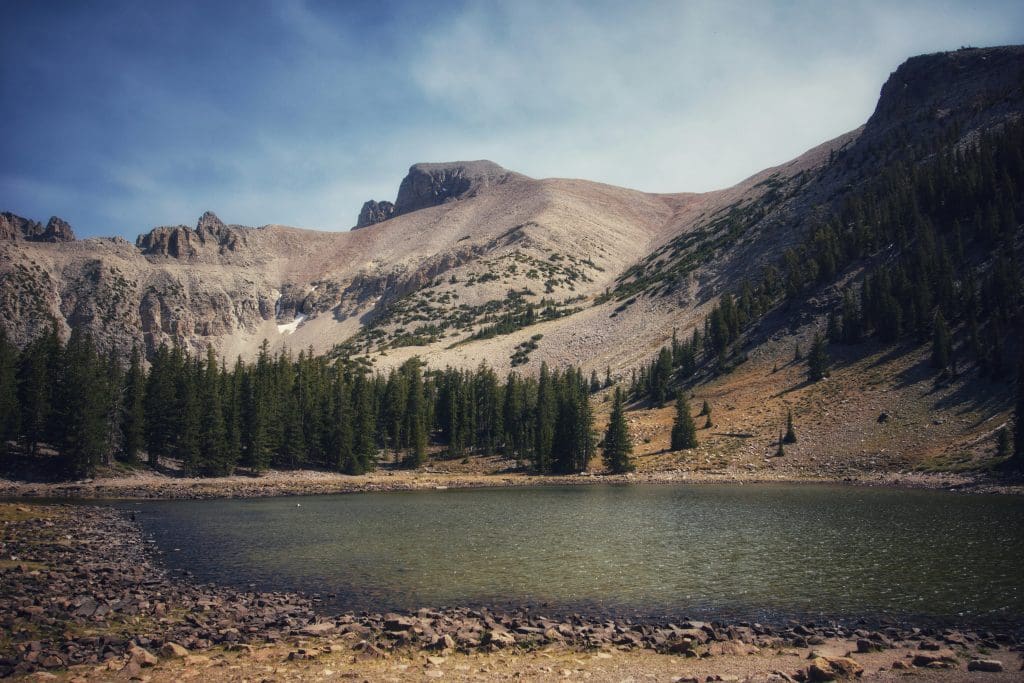
In late September 2026, the Ninth Circuit Court of Appeals issued a ruling in a water rights dispute between Nevada ranchers and the federal government. The dispute centers on rights to use water in the Baker and Lehman Creeks in eastern Nevada and the 1934 Baker-Lehman Decree which established water rights in the creek system through the process of adjudication. The lawsuit was filed in Nevada state court by Baker Ranches in 2021, alleging that the United States had violated the 1934 decree through its management of federal lands in the area, including Great Basin National Park. In response, the federal government argued that the lawsuit against it could not proceed because of the doctrine of sovereign immunity which prevents a government from being sued unless it has consented to the lawsuit. However, the Ninth Circuit has concluded that a federal law known as the McCarran Amendment waived the federal government’s sovereign immunity and determined that the Baker-Lehman Decree could be enforced against the United States. In the Western United States where water is scarce, understanding when and how water rights may be asserted against the federal government is likely to be increasingly important.
Water Rights Adjudication & the McCarren Amendment
In the United States, the right to use water is determined according to state law. In most of the Western United States, including the state of Nevada, water rights are governed by the doctrine of prior appropriation which employs a system of “first in time, first in right.” Under prior appropriation, water rights are based on seniority where the person to first begin using water is considered the most senior user of a particular water source. Senior users may enforce their right to water over junior users and in times of scarcity may use that seniority to ensure that junior appropriators do not use water out of turn. In other words, a senior user may insist that their water rights be completely satisfied before a junior user begins diverting water.
Because prior appropriation rights depend on seniority, it is important to know which water users are senior and how much water each user may divert. However, it is not always clear who was diverting first or how much water each user has a right to use. To help clarify water allocations, interested parties can initiate a water rights adjudication. A water rights adjudication is a legal process that identifies and confirms existing water rights within a certain area. This process is conducted through the court system and results in a court decree which establishes each adjudicated water right, including ownership and usage limits. Water rights adjudications help resolve conflicting claims, formalize existing water rights, and set management obligations for those subject to the adjudication.
Prior to 1913, water users in Nevada were required to individually adjudicate their water rights through individual private actions. To secure a water right, an individual claimant would file a legal complaint in state court to assert rights to a particular water source. The plaintiff would allege that the defendants, usually other water users diverting water from the same water source as the plaintiff, are interfering with the plaintiff’s ability to make full use of their water rights. In turn, the defendants would then assert their own water rights in court. Because the rights of all claimants to a particular water source are closely interrelated, courts considered the presence of all claimants essential to issuing a final determination. However, joining all the existing claimants to a river system into a private lawsuit initiated by one individual became more burdensome as Western states with prior appropriation systems became more populated. To solve this problem, several states, including Nevada, passed laws that established procedures to adjudicate all the rights on an entire stream system at once.
In 1913, Nevada adopted its statutory system for mass adjudicating water rights to an entire water source at once. Known as the 1913 Nevada Water Law or simply, the Water Law, the statute empowers the State Engineer to initiate a determination of the rights of various claimants to a water source. Nev. Rev. Stat. Ann. § 533.090. Once the determination is initiated, the State Engineer must publish a notice of the proceedings informing all impacted water rights claimants that they were required to submit information regarding their rights by a particular date. Nev. Rev. Stat. Ann. § 533.095. From there, the State Engineer develops a determination outlining the water rights of all the claimants to the water source, and sets a time a place to hear the objections of any claimant. Once the State Engineer finalizes the determination, a copy is filed with the appropriate state court. Nev. Rev. Stat. Ann. § 533.160. The court then sets a time for a hearing and any party who disagrees with the State Engineer’s determination may ask the court to reach a different conclusion. Nev. Rev. Stat. Ann. § 533.165. Ultimately, the adjudication process concludes when the court issues a final decree either affirming or modifying the State Engineer’s determination. Nev. Rev. Stat. Ann. § 533.185. The water rights outlined in that decree may then be enforced by the State Engineer and water commissioners. Nev. Rev. Stat. Ann. § 533.220.
While statutory adjudications helped to streamline the process of determining water rights, those adjudications still proved difficult to fully settle when the federal government refused to participate. Although the United States claimed large water rights in Western states, it could refuse state efforts to adjudicate water rights by asserting the doctrine of sovereign immunity, the legal doctrine which prevents a state from being sued without its consent.
In 1952, Congress sought to resolve this matter by adopting a law known as the McCarran Amendment. Under the McCarren Amendment, the federal government waives its sovereign immunity in any lawsuit for the “adjudication of rights to the use of water of a river system or other source[.]” 43 U.S.C. § 666(a). The statute is considered to apply retroactively, meaning that it waives the federal government’s sovereign immunity for water rights adjudications that occurred before the McCarran Amendment became law. Additionally, courts have repeatedly found that the McCarran Amendment only allows the federal government to be joined to lawsuits involving a “comprehensive water right adjudication.”
Lawsuit Background
The present court case centers on the Baker-Lehman Adjudication which determined the water rights on the Baker and Lehman Creeks in eastern Nevada. The adjudication was initiated in 1925 and a final court decree was issued in 1934. Although notified of the proceedings, the United States did not participate in the adjudication or assert any claims. Under Nevada’s 1913 Water Law, the 1934 decree is considered a final determination of water rights on the Baker and Lehman Creeks. Any future rights claimed on those water sources could only be adjudicated under a “supplemental adjudication” which may not disturb any existing rights under the 1934 Baker-Lehman Decree.
Baker Ranches, the plaintiff in Baker Ranches, Inc. v. Burgum, No. 24-5713 (9th Cir. 2026), holds adjudicated water rights under the Baker-Lehman Decree that date back to the 1870s. In turn, the United States claims two types of water rights on the Baker-Lehman Creek system. First, the United States holds rights to divert water that are set out in the Baker-Lehman Decree. Second, the United States claims that it holds reserved water rights which were not adjudicated in the Baker-Lehman Decree and have not been asserted until the litigation initiated by Baker Ranches.
Reserved water rights are a type of water right that is created when the federal government reserves land from the public domain for the establishment of a national park, forest, miliary base, Native American reservation, or other similar uses. The date of priority for reserved water rights is that date that the United States set aside the land. These rights are often unquantified, meaning it is not always clear how much water the United States has a right to use under a reserved water right until the right is formally adjudicated. However, it is generally recognized that a reserved water right grants the United States the right to use as much water as necessary to make the purpose of the land reservation possible.
In the Baker-Lehman Creek system, the United States claims reserved water rights for the Nevada National Forest, which was established in 1909, and for additional reservations made in 1922 for the Lehman Caves National Monument and in 1986 to create the Great Basin National Park. These reserved water rights are at the heart of the present legal dispute.
Baker Ranches filed a lawsuit in Nevada state court in 2021 to enforce its water rights under the Baker-Lehman Decree against the federal government. Specifically, Baker Ranches claimed that the United States had violated the requirement that every water user in the Baker-Lehman Creek system keep the flow of water in the system clear and unobstructed, and keep the main stream channel free of vegetation. According to Baker Ranches, the federal government had violated this portion of the Baker-Lehman Decree by diverting water for campgrounds, by felling logs that block creek channels with woody debris, and by planting vegetation that obstructs the main stream of Lehman Creek. Baker Ranches asserts that these activities have interfered with its water rights and filed a lawsuit seeking to enforce the Baker-Lehman Decree against the federal government.
After the lawsuit was filed, the United States sought to move the case from Nevada state court to federal court and claimed that the lawsuit against it could not proceed under the doctrine of sovereign immunity. To determine whether sovereign immunity applied, the federal district court considered whether the United States had waived immunity under the McCarran Amendment. According to the district court, the United States did not waive sovereign immunity in the present instance because the McCarran Amendment only waives such immunity for “comprehensive” water rights adjudications. The district court concluded that the 1934 Baker-Lehman Adjudication was not comprehensive because the United States did not participate in the adjudication process.
Baker Ranches appealed this decision to the Ninth Circuit.
Ninth Circuit Decision
The question before the Ninth Circuit Court of Appeals was whether the McCarran Amendment’s waiver of sovereign immunity for the administration of comprehensive water rights decrees applies to Baker Ranches’ claim against the United States for the enforcement of the 1934 Baker-Lehman Decree. Baker Ranches argued that the McCarran Amendment did waive sovereign immunity for the Baker-Lehman Decree and that its attempt to enforce the Decree against the United States may proceed. The United States argued that sovereign immunity was not waived because the McCarran Amendment only waives immunity for comprehensive water rights adjudications where all the rights of water rights owners on a particular stream are adjudicated. According to the United States, the Baker-Lehman Adjudication and resulting Decree was not comprehensive because the federal government did not participate in the adjudication and because the reserved rights it now asserts were not considered. Ultimately, the Ninth Circuit found that the McCarran Amendment had waived the United States’ sovereign immunity in the Baker-Lehman Adjudication and determined that Baker Ranches’ effort to enforce the Decree could proceed.
The Ninth Circuit began its analysis by reviewing the McCarran Amendment and determining that it would only have waived the United States’ sovereign immunity in the present case if the Baker-Lehman Decree was the result of a comprehensive water rights adjudication. First, the Ninth Circuit noted that the text of the McCarran Amendment does not require adjudications to be “comprehensive,” that requirement was imposed by courts to reflect Congress’s intended purpose. The court pointed to language from a Supreme Court case issued in 1976, Colo. River Water Conservation Dist. v. United States, 424 U.S. 800 (1976) which provides that the McCarran Amendment reflects a “clear federal policy” of avoiding “piecemeal adjudication of water rights” when a “comprehensive state system for adjudication of water rights” is available. According to the Ninth Circuit, the Supreme Court has ruled that the McCarran Amendment exists to support “comprehensive state systems for adjudication” and that the law’s waiver of sovereign immunity should only extend to water rights adjudications that occur within such a system.
Next, the Ninth Circuit considered whether the 1913 Nevada Water Law which governs Nevada’s water rights adjudication process established a “comprehensive state system” that the McCarran Amendment is meant to support. The court concluded that it did, noting that the purpose of the Nevada Water Law is to replace individual water adjudications with a comprehensive procedure that could serve as the final determination of all water rights on a particular stream system. Crucially, the court concluded that the Nevada Water Law could not function as anything other than a comprehensive state system of water rights adjudication.
Finally, the Ninth Circuit noted that the Baker-Lehman Adjudication was conducted according to the procedures outlined in the Nevada Water Law and that adequate notice had been provided to the United States while the adjudication was ongoing. According to the court, a claimant’s failure to assert its alleged water rights during an adjudication does not mean the adjudication is not “comprehensive” for the purpose of the McCarran Amendment. Although the United States did not assert its reserved rights during the Baker-Lehman Adjudication, the Ninth Circuit concluded that the adjudication and resulting Decree are the product of a comprehensive, final determination of all water rights in the Baker-Lehman Creek system that the McCarran Amendment was meant to support. Because the Baker-Lehman Adjudication satisfies the McCarran Amendment, the Ninth Circuit held that the United States had waived its sovereign immunity and that that Baker Ranches’ effort to enforce the Baker-Lehman Decree against the United States could proceed.
Conclusion
While the underlying litigation between Baker Ranches and United States will likely take months or years longer to resolve, the ruling from the Ninth Circuit provides additional clarity and when the McCarran Amendment applies to water rights adjudications, particularly those that occurred before the McCarran Amendment was passed. In Nevada alone, 67 decrees pre-date the McCarran Amendment. As surface water flows across the Western United States become less predictable due to drought and changes in climate patterns, it is likely that disputes over past water rights adjudications and resulting decrees will continue. Because the federal government holds large water rights throughout this region, understanding when and how water rights may be enforced against the United States will remain important.
To read the Ninth Circuit’s decision in Baker Ranches, Inc. v. Burgum, click here.
To read the text of the McCarran Amendment, click here.
For more resources on water law from the National Agricultural Law Center, click here.