
By Phillip Powell
University of Arkansas Division of Agriculture
Fast Facts
- Discussion addresses most recent text of Farm Bill from Senate Ag Committee
- Arkansas, North Carolina and Nebraska among states with new laws
- Webinar offered at no cost by National Agricultural Law Center
FAYETTEVILLE, Ark. — Foreign ownership of agricultural land in the United States is the focus of a free webinar hosted by the National Agricultural Law Center on July 15.
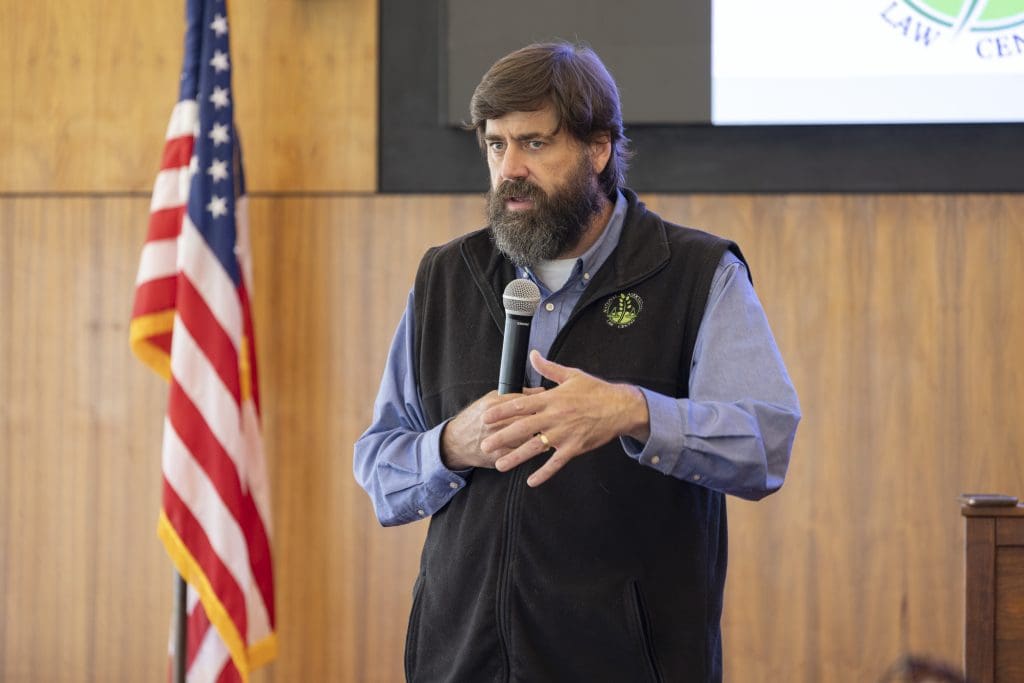
FOREIGN OWNERSHIP — Harrison Pittman, director of the National Agricultural Law Center, will host a free webinar on July 15 addressing laws on foreign ownership of agricultural land in the United States. (UADA photo)
With new state restrictions, federal proposals and ongoing litigation rapidly reshaping the legal landscape, foreign ownership of U.S. agricultural land remains one of the most closely watched issues in agricultural law, said Harrison Pittman, director of the center.
“Foreign ownership of agricultural land continues to garner significant attention across the country with continued activity at both the state and federal level,” Pittman said. “We’ll cover a lot of these developments, including litigation, at the July webinar.”
The webinar, “Foreign Ownership of Ag Land: Federal and State Legislative and Litigation Update,” will be held 11 a.m. to 12 p.m. central time on July 15. Register for the event online.
Pittman will discuss how each state takes its own approach to restricting foreign ownership of agricultural land, including recent updates to laws in Arkansas, North Carolina and Nebraska. On the federal level, he will cover how the U.S. Department of Agriculture and Congress have been tackling the issue, including the most recent text of the Farm Bill from the Senate Agriculture Committee.
Pittman previously testified on this topic to the U.S. Senate Committee on Agriculture, Nutrition and Forestry in September 2023.
Additional information about the webinar, including registration details, are available on the National Agricultural Law Center’s website, nationalaglawcenter.org. Follow @nataglaw on X, Facebook, and LinkedIn, and subscribe to NALC’s newsletter “The Feed.”
About the National Agricultural Law Center
Created by Congress in 1987, the National Agricultural Law Center serves as the nation’s leading source of agricultural and food law research and information. The NALC works with producers, agribusinesses, state and federal policymakers, lenders, Congressional staffers, attorneys, land grant universities, students, and many others to provide objective, nonpartisan agricultural and food law research and information to the nation’s agricultural community.
The NALC is a unit of the University of Arkansas System Division of Agriculture and works in close partnership with the USDA Agricultural Research Service, National Agricultural Library.
About the Division of Agriculture
The University of Arkansas Division of Agriculture’s mission is to strengthen agriculture, communities, and families by connecting trusted research to the adoption of best practices. Through the Agricultural Experiment Station and the Cooperative Extension Service, the Division of Agriculture conducts research and extension work within the nation’s historic land grant education system.
The Division of Agriculture is one of 22 entities within the University of Arkansas System. It has offices in all 75 counties in Arkansas and faculty on three system campuses.
Pursuant to 7 CFR § 15.3, the University of Arkansas Division of Agriculture offers all its Extension and Research programs and services (including employment) without regard to race, color, sex, national origin, religion, age, disability, marital or veteran status, genetic information, sexual preference, pregnancy or any other legally protected status, and is an equal opportunity institution.
# # #
Media Contact:
Phillip Powell
National Agricultural Law Center
ppowell1@uark.edu