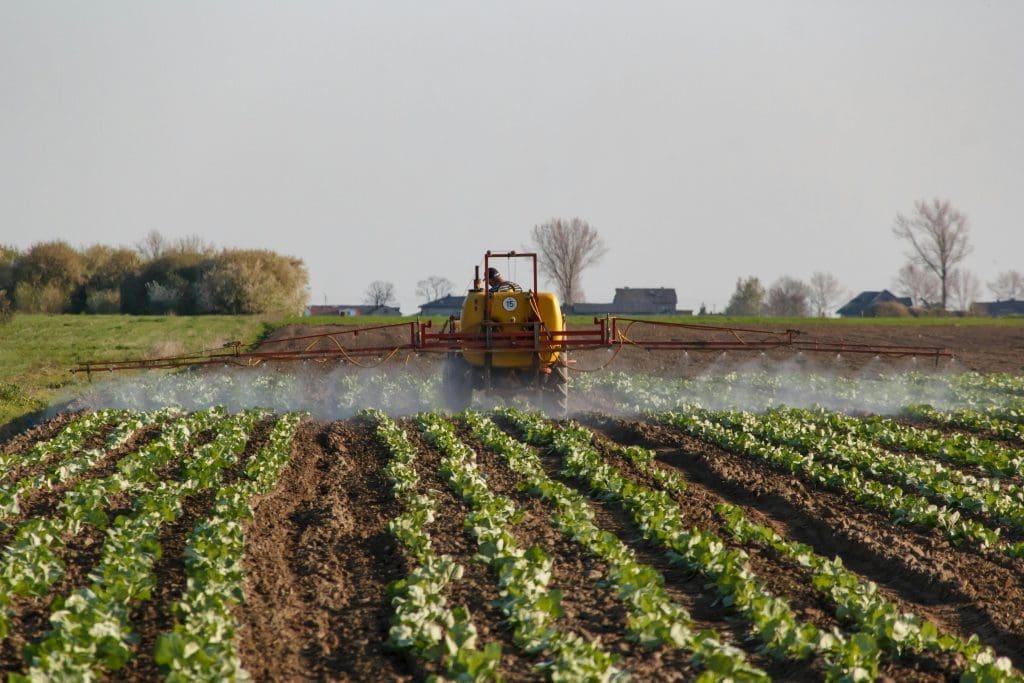
In April 2026, the Environmental Protection Agency (“EPA”) released a draft version of its Fungicide Strategy, the most recent move in the agency’s effort to reduce pesticide exposure to endangered wildlife. The draft Fungicide Strategy is similar to both the Herbicide and Insecticide Strategies that EPA issued in 2024 and 2025 which focus on reducing pesticide spray drift and runoff to better protect wildlife species listed as threatened or endangered under the Endangered Species Act (“ESA”). EPA initially launched its effort to reduce pesticide exposure to listed species in 2022 after years of mounting litigation targeting the agency’s failure to fully comply with its ESA responsibilities when registering pesticide products under the Federal Insecticide, Fungicide, and Rodenticide Act (“FIFRA”). The goal of EPA’s new approach is to create stronger pesticide labels while reducing impacts to listed species.
Background
In 2022, EPA published a document titled Balancing Wildlife Protection and Responsible Pesticide Use: How EPA’s Pesticide Program Will Meet its Endangered Species Act Obligations. That document, paired with an update released later that year, described EPA’s plan to begin introducing new mitigation measures to pesticide labels aimed at reducing exposure to threatened and endangered species. The plan is centered around creating individual strategy documents for herbicides, insecticides, fungicides, and rodenticides, that limit pesticide exposure to endangered wildlife by requiring additional application restrictions. According to EPA, the new policy approach is necessary to address what the agency has described as a “decades-old challenge” to satisfy the agency’s obligations under both the ESA and FIFRA.
The ESA is the predominant federal wildlife protection law in the United States, while FIFRA is the nation’s primary federal statute regulating pesticide use. Under the ESA, all federal agencies, including EPA, are required to consult with the United States Fish and Wildlife Service (“FWS”) to ensure that the actions that federal agencies fund, authorize, or carry out will not “jeopardize” the continued existence of species protected under the ESA. 16 U.S.C. § 1536(a)(2). The consultation process can be time consuming because it requires FWS to examine the impacts to any listed species affected by an agency’s proposed action. To learn more about the consultation process, click here to view NALC’s ESA Manual.
EPA takes hundreds of actions under FIFRA each year, including but not limited to registering new pesticide products, conducting registration review of existing products, and authorizing new uses of registered pesticide products. Since the ESA was enacted in 1973, EPA has struggled to fully satisfy its consultation responsibilities when carrying out FIFRA actions. As a result, the agency has faced numerous lawsuits filed primarily by environmental groups seeking to compel EPA to complete ESA consultation on FIFRA actions. Because courts tend to strictly interpret the ESA’s consultation requirements, most of these lawsuits have resulted in either a judge requiring EPA to complete the consultation process, or a settlement agreement where EPA has agreed to complete consultation. Currently, EPA believes it will take into the 2030s to finalize all the FIFRA-related ESA consultations that are under a judicially enforced deadline.
To both better protect endangered wildlife from pesticide exposure and create pesticide labels that are less likely to be challenged in court, EPA launched its new approach to satisfying its ESA responsibilities when carrying out actions under FIFRA. As part of this effort, EPA has sorted all registered pesticides into broad groups – herbicides, insecticides, fungicides, and rodenticides – and for each group developed mitigation measures designed to reduce pesticide exposure to protected species. EPA issued the final version of its Herbicide Strategy in 2024, and its final Insecticide Strategy in 2025. Both Strategies outline spray drift and runoff mitigations that the agency expects to include on herbicide and insecticides labels going forward. Now, the agency has released a draft version of its Fungicide Strategy which seeks to reduce the potential impacts of agricultural fungicides to listed species.
Draft Fungicide Strategy
Like both the Herbicide and Insecticide Strategies, the draft Fungicide Strategy proposes to reduce fungicide exposure to listed species by identifying new mitigation measures that will be added to the labels of agricultural fungicides. Similar to the previous Strategies, the draft Fungicide Strategy outlines mitigations that are intended to limit pesticide exposure by reducing spray drift and runoff. However, where the Herbicide and Insecticide Strategies focused on impacts to species which are similar to the target pests of the pesticides (i.e., the Herbicide Strategy focused on impacts to listed plant species while the Insecticide Strategy focused on invertebrate species), the draft Fungicide Strategy evaluates potential impacts to all taxonomic groups of listed species. This is because fungicides can exhibit direct toxicity of multiple taxonomic groups while herbicides tend to exhibit toxicity primarily to plants and insecticides primarily to invertebrates. Additionally, the draft Fungicide Strategy considers that fungicide use is more localized than use of either herbicides or insecticides. Fungicides tend to be used more frequently in areas with high precipitation such as the Mississippi Delta region or around the Great Lakes, while herbicides and insecticides are prevalent throughout the country. EPA has taken this into account and given consideration to areas where usage of fungicides are low and may therefore present less of a threat to endangered wildlife.
Despite those differences, the draft Fungicide Strategy employs the three-step framework described in the previous Strategy documents. Under the first step, EPA will determine whether a particular fungicide has the potential to have population-level impacts to any listed species. Possible outcomes include “not likely,” “low,” “medium,” or “high.” If a fungicide is determined to have either low, medium, or high levels of population-level impacts, then the product will require some degree of additional mitigation. To make that determination, EPA will consider how a fungicide is used, how it behaves in the environment, and overall toxicity thresholds for different species. Ultimately, the amount of required mitigation measures will increase when population-level threats are greater.
After making the final determination under step one, EPA will proceed to step two. There, EPA will assign mitigation measures to a particular fungicide based on the product’s degree of population-level impacts to listed species. As with the Herbicide and Insecticide Strategies, mitigation measures included in the draft Fungicide Strategy are aimed at limiting spray drift and runoff. To reduce spray drift, EPA is primarily focused on requiring increase spray buffers, with the buffer zone increasing according to the level of mitigation required. The agency has also proposed allowing the use of drift reducing adjuvants to limit spray drift while cutting down on the required buffer distance. To reduce fungicide runoff, EPA is relying on the Mitigation Menu established under the two previous Strategies. The Mitigation Menu, which can be found here, shows a variety of different mitigation measures that have been assigned a point value. Based on its conclusion from step one, EPA will assign each fungicide an amount of runoff mitigation points necessary to make an application. Applicators will then review the Mitigation Menu and identify measures they could take to achieve the necessary number of runoff points. The Mitigation Menu is extensive and includes a wide range of activities that are intended to provide pesticide applicators with a high degree of flexibility in choosing which mitigation measures are best for them.
While mitigation measures for spray drift and runoff identified in the draft Fungicide Strategy mirror those identified in the Herbicide and Insecticide Strategies, the Fungicide Strategy differs from the prior Strategies by including mitigation measures for species that may be present on agricultural fields. In the Herbicide and Insecticide Strategies, EPA concluded that the greatest degree of risk to listed species came from pesticides traveling off-field because endangered plants and vertebrates are unlikely to be in or on agricultural sites. However, EPA has identified eleven listed species that may be present on agricultural fields and could face population-level impacts following fungicide applications. To mitigate risks to those species, EPA is considering application timing restrictions to avoid exposure to species of concern. Those restrictions include prohibiting applications of fungicides from the time a crop begins to flower until the petals drop, or between sunrise and sunset during bloom when pollinators are more likely to be active.
Finally, under step three, EPA will determine the geographic areas where mitigation measures will be required. In some instances, EPA expects that a mitigation measure will be required across a fungicide’s entire use area. If that is the case, EPA will likely include mitigation requirements on the fungicide’s general label. However, in other cases, EPA expects that the mitigation requirements will be geographically limited to protect a certain species. When that occurs, EPA will rely on its website Bulletins Live! Two to inform applicators to the specific geographic areas where mitigations are required. EPA will include language on a fungicide’s label to direct applicators to check Bulletins Live! Two for any active bulletins in the area.
Next Steps
The draft Fungicide Strategy is currently open for a 60-day public comment period that will conclude on June 29, 2026. EPA has stated that its intention is to publish a final version of the Strategy by the end of November. Like the Herbicide and Insecticide Strategies, the Fungicide Strategy will not be self-implementing. Instead, EPA will apply the Fungicide Strategy to new fungicide products put forward for registration and to currently registered products that come up for registration review.
To view the draft Fungicide Strategy, click here.
To submit a comment on the draft Fungicide Strategy, click here.
For more information from EPA, click here.
For more information on pesticides from the National Agricultural Law Center, click here.