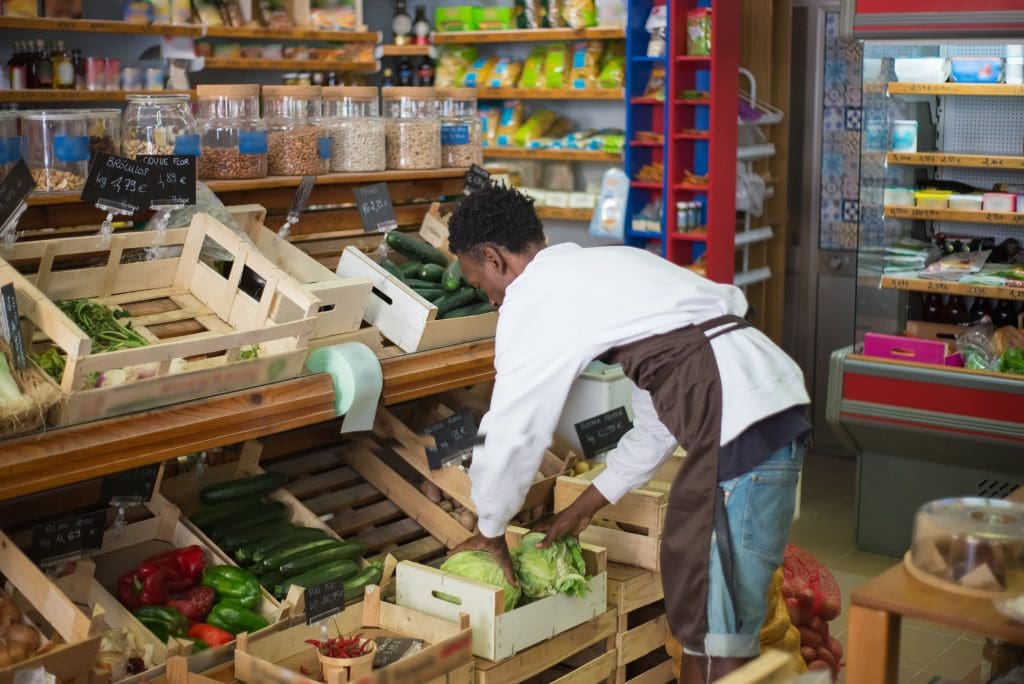
On May 8, 2026, the US Department of Agriculture (USDA) published final rulemaking that updated stocking requirements for authorized retailers participating in the Supplemental Nutrition Assistance Program (SNAP). The final rule, titled “Updated Staple Food Stocking Standards for Retailers in the Supplemental Nutrition Assistance Program,” specifically increases the minimum number of “staple foods varieties” a SNAP retailer is required to carry. This Rule will require that SNAP retailers, including smaller and more rural operators, have a larger quantity and variety of foods in their stores.
Background on SNAP
SNAP is a federal program that “provides food benefits to low-income families to supplement their grocery budget.” Originally authorized through the Food Stamp Act of 1964, SNAP used to be known as the Food Stamp Program, however, its name was officially changed to “SNAP” through the 2008 Farm Bill. Further, in 2008, the Food Stamp Act’s name was also changed to the Food and Nutrition Act of 2008, and it remains the authorizing legislation for the program.
SNAP is managed on both the federal and state levels which each playing a different role in the program’s operation. On the federal level, USDA’s Food and Nutrition Administration (FNA) (formally Food and Nutrition Service) will authorize and monitor the retailers who redeem SNAP benefits and determine which foods can be purchased with SNAP benefits. On the other hand, states will determine which households are eligible to participate and will issue benefits to the participating households.
The roles of USDA and states in the administration of SNAP as been an issue that has received increased attention over the past year. This increased attention is the result of a few factors. First, H.R. 1, often called the “One Big Beautiful Bill Act,” that Congress enacted last year changed the way SNAP’s administration was funded. Historically, USDA and the states split the cost of administering the program. However, H.R. 1 adjusted that to require states to pay a portion of administration costs if their SNAP error rates were above a specific percentage. To learn more about this, click here to read NALC article “One Big Beautiful Bill Act: Nutrition Title.”
Further, this past year saw a wave of states attempt to ban specific foods from being eligible for purchase with SNAP benefits. While the determination of eligible foods is specifically under the jurisdiction of the USDA, states have started submitting waivers requesting that the agency prohibit certain foods from eligibility. Currently, USDA has approved 23 states; however, the prohibited foods vary from state to state. To learn about the specific approved state waivers, click here. For more information about the waiver process, click here to read NALC article “Excluding ‘Junk’ Food from SNAP Benefits.”
History of Updated Stocking Standards
As previously mentioned, one area of SNAP responsibility that is under the jurisdiction of the USDA is authorizing retailers to receive and redeem SNAP benefits. Per the Food and Nutrition Act of 2008, SNAP benefits are only allowed to be used “to purchase food from retail food stores which have been approved for participation.” 7 USC § 2013. Retail food stores are defined as “an establishment or house-to-house trade route that sells food for home preparation and consumption.” 7 USC § 2012. To become an authorized SNAP retailor, a retail food store must qualify under one of the following two pathways – Criterion A: staple food inventory or Criterion B: staple food sales.
The requirements of Criterion A are the subject of the 2026 Final Rule and will be discussed at length below. However, generally speaking, Criterion A requires that an authorized SNAP retailer maintain a stock of certain foods, called staple foods, to be eligible to redeem SNAP benefits. Further, an authorized retailer is required to maintain a certain number of “varieties” of the staple foods. Language in the 2014 Farm Bill increased the number of varieties that a retailer must carry in order to be authorized to accept SNAP benefits. Specifically, it amended the definition of retail food stores to require that authorized retailers must offer “a variety of at least 7 foods in each of the 4 categories of staple foods” and includes “perishable foods in at least 3 of the categories.”
In 2016, USDA published a Final Rule to implement the language of the 2014 Farm Bill. It included similar provisions expanding the staple food variety requirements to 7; however, it was never enforced because Congress intervened. In a 2017 Appropriations Bill, Congress prohibited its enforcement “until the Secretary of Agriculture amends the definition of the term ‘variety’ . . . and ‘variety’ as applied to the term ‘staple food.’” Sec. 765 of Public Law No. 115-31. Specifically, Congress halted the 2016 Rule’s enforcement until USDA expanded on the definition of “variety” to “increase the number of items that qualify as acceptable” in each staple food category. Subsequent appropriations actions continued this prohibition on enforcement.
To meet the requirements of the appropriations language, USDA proposed rulemaking in 2019. Titled “Providing Regulatory Flexibility for Retailers in the Supplemental Nutrition Assistance Program,” this proposed rule sought to increase the number of food items that would qualify as staple food varieties, but it was met with over 9,000 comments of opposition. Thus, instead of finalizing the 2019 rule, the agency proposed new rulemaking in September 2025 which after going through a proper notice and commenting period was finalized in May 2026.
2026 Final Rule
The 2026 Final Rule implemented the language from the 2014 Farm Bill. First, it adjusted the definitions of key terms related to stocking standards found in 7 CFR § 271.2.
Staple food is defined as “food intended for home preparation and consumption, excluding accessory foods.” The definition further includes the following four categories, “1) Protein, including plant-based sources; 2) grains; 3) vegetables or fruits; and 4) dairy, including plant-based alternatives.” The 2014 Farm Bill, codified at 7 USC § 2012(q), includes similar language identifying the four staple food categories as “A) meat, poultry, or fish; B) bread or cereals; C) vegetables or fruits; and D) dairy products.” The US Code further clarifies that staple foods do not include accessory food items like “coffee, tea, cocoa, carbonated and uncarbonated drinks, candy, condiments, and spices.”
The Code does not separately define “accessory food,” but the 2026 Final Rule does. Accessory food is “food that is generally considered a snack food or dessert, food that is meant to complement or supplement meals, or food used primarily in the meal preparation process.” The Rule further states that accessory foods may not be considered staple foods for purposes of meeting the stocking standard requirements for SNAP participation. For example, a staple food would be a bag of frozen chicken breasts, while an accessory food would be a bottle of ketchup. Under this example, a SNAP authorized retailer would be able to count the chicken breasts toward its stocking requirements, but the ketchup would not be counted.
Further amendments to 7 CFR § 271.2 made by the Final Rule, include a definition for “prepared foods” and a revision to paragraph (1) of the “retail food store” definition. Prepared foods are defined as “hot or cold food or beverages ready for immediate consumption that are assembled, cooked, mixed, or otherwise made ready by the retailer on the premises of the retail food store, except for bread” and they are not considered a “staple food.” The definition excludes food intended for onsite or immediate consumption “that is only cut or sliced on the premises” and not otherwise prepared.
Paragraph (1) of the definition of “retail food store” is modified to read “an establishment or house-to-house trade route that sells food for home preparation and consumption and meets the criteria as set forth in 7 CFR § 278.1(b).”
Amendments to Criterion A
To be authorized to accept SNAP benefits, a participating retailer must be eligible under one of two categories – Criterion A or Criterion B. The stocking standards that were updated by the 2026 Final Rule specifically amend the requirements of Criterion A. The rule requires that a retail food store must sell no fewer than:
- Seven distinct varieties of staple food items in each of the four staple food categories (a minimum of 28 distinct staple food varieties);
- Three stocking units of each qualifying staple food variety (minimum of 84 stocking units)
- One variety of perishable foods in three different staple food categories (minimum of three of the 28 varieties and 9 of the 84 stocking units.
The 2026 Final Rule now requires that authorized SNAP retailers have seven distinct varieties of staple foods for each of the four staple food categories on a continuous basis. Distinct staple food varieties are foods that “differ by kind of plant, the kind of animal, or by main ingredient within the same staple food category.” For example, apples and oranges are two different varieties in the “vegetables or fruits” category of staple foods. This means that a retail food store must have at least seven different varieties of “vegetables or fruits,” along with seven different varieties of the other three categories, to qualify as an authorized SNAP retailer.
Further, to qualify as an authorized retailer, a food retail store must have at least three stocking units of each staple food variety. Stocking standards are defined by USDA as a “can, bunch, box, bag, or package in which a product is usually sold.” The agency gives detailed examples of what constitutes a stocking unit for both items that are usually sold individually or not usually sold individually. For example, one stocking unit for a staple food like strawberries, which are usually sold in packages of multiple fruits, would be one package. On the other hand, for a staple food like watermelon that is usually sold individually, one individual fruit is a stocking unit. For more information on stocking standards, click here to visit USDA’s website.
Previously, to qualify under Criterion A, an authorized SNAP retailer was only required to have three distinct varieties of each staple food category. The practical effect of these rules is that all authorized SNAP retailers, regardless of the size or location of the operation, will be required to increase both the quantity and diversity of the staple food products they have in store at all times. Additionally, though the 2026 Final Rule did not change the number of stocking units each variety must have, it will require that authorized retailers maintain a larger stock by increasing the required number of varieties. Specifically, an authorized retailer is now required to continuously have a minimum of 84 stocking units when they previously only needed 36. Further, the Final Rule now requires that three staple food categories have at least one variety of perishable foods while previously, only two staple food categories had to meet that requirement.
Variety Specifics
In addition, the Rule provides that a multi-ingredient staple food’s category will depend on which food is the main ingredient, or the “first ingredient other than water, broth, or stock listed on the ingredient list.” It further clarifies that different brands, flavorings, or types of the same foods do not count as distinct varieties. For instance, vanilla yogurt and plain yogurt are the same variety and brown rice and white rice are same variety.
However, the Rule does include a list of “specially designated varieties” that provides instances where foods with the same main ingredient will be considered distinct varieties. Single-ingredient varieties are foods with no other added ingredients besides fortifying vitamins, and they count as a distinct staple food variety from multi-ingredient foods that have the same main ingredient. For instance, the Rule considers wheat flour a distinct variety from frozen lasagna even though wheat flour is the first ingredient other than water listed on the frozen lasagna’s ingredient list. The Rule also provides a clarification for shelf-stable varieties. Meat, poultry, or fish; liquid milk; and dried/powered milk sold in shelf-stable form will count as distinct varieties. For example, raw ground beef and canned (shelf-stable) beef stew with beef as its main ingredient will be considered different varieties.
The Rule also clarifies how plant-based alternatives are categorized. Plant-based dairy alternatives will be considered distinct varieties in the dairy category of staple foods. For example, soy milk and traditional milk will be two separate dairy staple food varieties. Further, the Rule states that nuts/seeds, beans, peas, and lentils will count in the protein category.
Accessory Foods
The Final Rule further creates a section pertaining to accessory foods. As mentioned before, accessory foods are not considered staple foods. The Rule clarifies that accessory foods can be 1) snack and dessert foods, such as chips, trail mixes, brownies, candy bars, granola bars, or jerky; 2) food items that complement or supplement meals, such as carbonated beverages, energy drinks, condiments, jelly, or sweeteners; or 3) edible items primarily used in the food preparation process, such as vanilla extract, dried spices, baking soda, cooking oils, or broth. It is worth noting that the categorization of these food items as accessory foods has no impact on their eligibility for purchase by SNAP participants with SNAP benefits. This categorization merely relates to the stocking requirements authorized retailers must follow. An accessory food’s eligibility for purchase with SNAP benefits will depend on the location of its retailer and whether the state where it is located has prohibited its purchase through an approved waiver.
Impact of the Final Rule
Practically, this Final Rule will require SNAP authorized retailers to maintain a larger stock and variety of staple foods. However, it might be challenging for smaller operators to continuously maintain a stock of staple foods that meet these requirements. Further, it could be difficult from a supply chain perspective for authorized retailers, such as convenience stores, located in more rural or isolated areas. If a retailer is found to be out of compliance with the stocking standards, it may be subject to a denial or withdrawal of authorization as a SNAP retailer. The threat of smaller or more isolated retailers losing their authorization has raised concerns for food insecure communities.
The Trump administration has celebrated this Final Rule as a “Make America Healthy Again” win that “puts real food back at the center of SNAP.” However, the Final Rule has been met with a varied response. NACS, an association that represents convenience stores, expressed concern that the Final Rule will hurt small businesses that are authorized as SNAP retailers. Specifically, NACS says the Rule’s groupings of varieties are “broad” and “unclear,” and require “retailers to carefully evaluate nearly every product to determine what counts.” On the other hand, The National Grocers Association released a statement “welcom[ing] USDA’s final stocking standards” and “encourag[ing]” the expansion of programs that “incentivize healthy eating and increase access to fresh, locally sourced foods.”
This rule will become effective on July 7, 2026 with retailer compliance required no later than November 4, 2026.