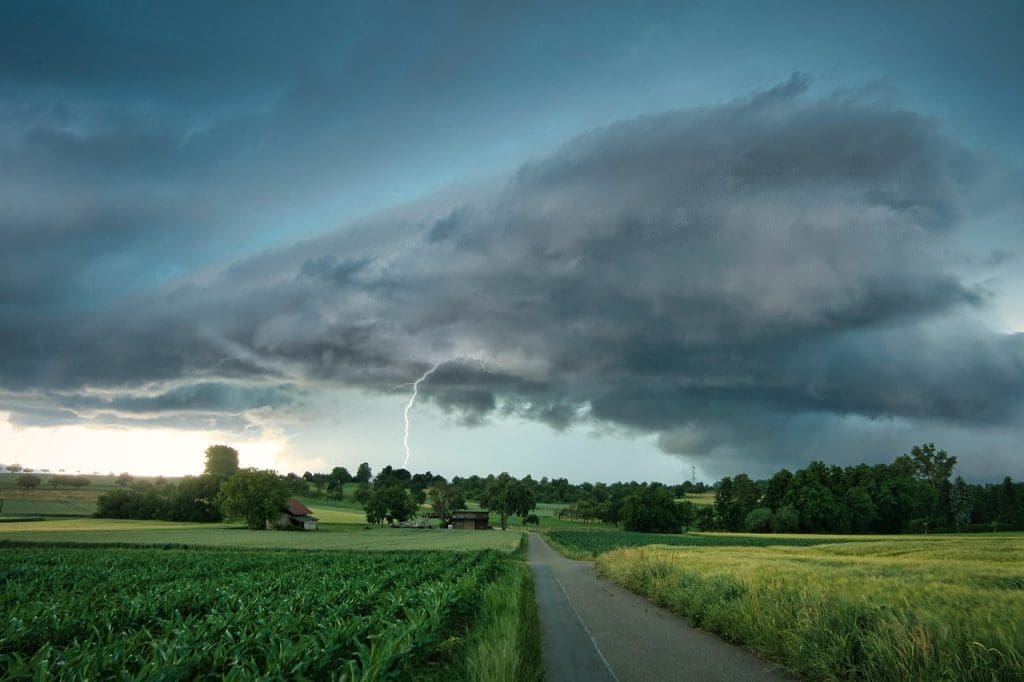
According to the American Farm Bureau Federation, U.S. agricultural producers lost $20.3 billion in 2024 due to natural disasters such as floods, wildfires, and droughts. These events are unpredictable and can often be devastating for individual operations. USDA’s Farm Service Agency (FSA) offers various financial assistance programs specifically intended to provide aid to farmers during such difficult circumstances. This article will highlight a group of selected programs and discuss their respective eligibility requirements.
Background
The FSA is an agency of the USDA created in 1995 when the USDA consolidated several of its existing services. The FSA serves various functions in its present form, which include but are not limited to: handling the administration of farm commodity programs; providing farm loans; and implementing the Conservation Resource Program. This article will focus on the financial aid that FSA offers agricultural producers through its various services. This financial aid comes in different shapes and sizes, ranging from traditional loans to direct compensation for losses resulting from a natural disaster. FSA assistance is often accompanied by numerous prerequisites for qualification. Understanding how to qualify is the first step for receiving financial aid from the FSA. Please note, in addition to the various programs offered by the FSA, a large portion of disaster assistance comes in the form of supplemental appropriations from Congress.
Emergency Loan Program
The FSA’s Emergency Loan Program (ELP) functions similar to traditional bank loans but differs in several ways. The ELP is available to producers who have suffered production and physical losses from flooding, droughts, quarantine, or “other natural disasters.” Importantly, producers should be aware that applications for emergency loans must be filed with the FSA within eight months of the disaster or quarantine designation date. Producers do not need to be concerned as to whether the specific type of disaster event they experienced will qualify for the program. So long as a producer owns or operates land in a county that has been declared by either the President or designated by the Secretary of Agriculture as a disaster or quarantine area, they will have met the threshold requirement for the ELP. Producers can quickly determine whether they meet this requirement through the USDA’s Disaster Designation Information webpage, which can be found here. There, producers can find detailed records of U.S. counties designated as disaster areas. Producers should also be aware that “all counties contiguous to the declared, designated, or quarantined primary counties” will also be eligible for loans.
Once a producer determines that they are either located in or contiguous to a designated disaster area, they must begin to consider the program’s other requirements. First, the FSA requires that applying farmers be “established family farm operators” possessing “sufficient farming or ranching experience.” The FSA does not define “sufficient farming or ranching experience” for the purposes of the ELP. Producers must also be citizens or permanent residents of the U.S. to qualify for the ELP. Eligible producers must have suffered an actual loss of production below normal yields, or a physical loss of livestock, livestock products, real estate, or personal property. Producers must have an “acceptable” credit history, an inability to receive credit from commercial sources, and repayment ability. Finally, the FSA requires that all emergency loans be fully collateralized. “Collateral” refers to the personal property subject to a security interest. To learn more about collateral and secured transactions, click here.
Currently, producers can borrow up to one hundred percent of actual production or physical losses to a maximum amount of $500,000 through an ELP loan. Current interest rates for FSA loan programs can be found here. The loan terms vary depending on the losses suffered by the qualifying producer. Producers seeking loans for crops, livestock, and non-real estate losses typically must repay the loan in no more than seven years. The exact duration will depend on “the loan purpose, repayment ability, and collateral available as loan security.” The ELP also specifies that in “special circumstances” a term of up to twenty years may be authorized and in “certain circumstances” repayment may be made over a maximum of 40 years. The FSA does not provide examples of these special or certain circumstances. However, the ELP does specify that “loans for physical losses to real estate are normally repaid within 30 years.”
Livestock Forage Disaster Program
The FSA operates livestock programs intended to provide financial aid to producers who have suffered a grazing loss resulting from natural disasters. One such program is the Livestock Forage Disaster Program (LFP). The LFP is not a loan program and functions by providing a monthly payment to eligible cattle producers. The rate is calculated using FSA’s livestock payment rates. The LFP stipulates that total payments will “not exceed five monthly payments for the same kind, type, and weight range of livestock.” Since 2019, no eligible producer (excluding a joint venture or general partnership) may receive more than $125,000 in total payments from the program.
Eligibility for the LFP is contingent on numerous factors. Similar to the emergency loan, producers seeking compensation under the LFP should determine whether their county is covered. Grazing land or pastureland must be physically located in a county that has been determined by the U.S. Drought Monitor as having, at minimum, at least a severe drought. To determine whether a county meets the drought intensity requirements, click here to view a list of eligible counties.
Producers must also consider the eligibility of their livestock. The FLP provides coverage for qualifying grazing animals, which include alpacas, beef cattle, buffalo, beefalo, dairy cattle, deer, elk, emus, equine, goats, llamas, ostrich, reindeer or sheep. The livestock must have been owned, leased, purchased, or held by a contract grower during the 60 days prior to the starting date of an eligible drought or fire condition. The livestock must be part of a commercial farming operation and the LFP will not cover livestock used for hunting, racing, or the owner’s personal consumption. As part of that commercial farming operation, eligible livestock must have “been sold or otherwise disposed of due to a qualifying drought condition during the current production year or up to two production years immediately preceding the current production year if there is a systemic drought condition.” Finally, any livestock that “were or would have been” located in a feedlot when the drought or fire began are not eligible for this program.
The FLP, like other disaster assistance programs, comes with a handful of producer requirements. First and foremost, the applicant must be a U.S. citizen, resident alien, an entity legally organized under state law, or an Indian tribe or tribal organization defined in the Indian Self-Determination and Education Assistance Act. Next, producers must have owned, leased, or worked as a contract grower for the covered livestock during the 60 days before an eligible drought or fire. Producers must then show the pastureland or grazing land is physically located in a covered county, as discussed above. However, coverage is also available to rangeland managed not by the producer, but by a federal agency. If the producer is prohibited by the managing federal agency from grazing livestock they would otherwise be allowed to graze, due to a qualifying fire, they may be eligible under the FLP. Finally, producers must produce evidence showing they have actually suffered a loss and then “timely” file an acreage report for all grazing land the producer is seeking assistance on. If a producer qualifies, they must submit an application to their local FSA office by March 1 of the year following the loss.
Noninsured Crop Disaster Assistance Program
For producers dealing with non-insurable crops who suffered a loss due to natural disasters, the FSA offers its Noninsured Crop Disaster Assistance Program (NAP). The Federal Crop Insurance Program (FCIP) provides coverage options to producers for a wide range of crops, but some remain excluded under the current terms of the FCIP. Examples of non-insurable crops include: crops grown for food, crops grown for livestock consumption, sweet sorghum, sea oats, honey, aquaculture, and Christmas trees. These examples are not an exhaustive list. This FSA program offers financial aid to producers of crops not covered by the FCIP who have suffered losses due to natural disasters. Eligible natural disasters include droughts, a freeze, hailstorms, hurricanes, earthquakes, floods, and conditions such as excessive heat, plant disease, volcanic smog, or insect infestation.
After determining crop and disaster eligibility, applicants must consider their eligibility as a producer. The NAP is less stringent in its eligibility requirements than other FSA programs. To be eligible for NAP, the producer must have an actual interest in the non-insurable crops. This means that the applying producer must share the risk of producing the crop and possess an ownership share in the crop. However, the FSA does not stipulate the extent to which a producer must “share the risk” or if a minimum level of ownership shares are required. The FSA does, however, preclude eligibility for producers with an adjusted gross income in excess of $900,000. This is likely to ensure the availability of funds for lower-income, smaller-scale farming operations less likely to recover from a natural disaster.
Functionally, the NAP provides coverage to producers “equivalent to the catastrophic level risk protection plan of insurance coverage.” Under the Federal Crop Insurance Act, the Federal Crop Insurance Corporation is required to provide a “catastrophic risk protection plan” to assist producers suffering from natural disasters. This requirement is codified in the Federal Register. To apply for coverage, producers must complete the CCC-471 “Application for Coverage” form. Then, producers must pay a service fee of the lesser of $325 per crop or $825 per producer per administrative county, but will not be required to pay more than $1,950 if a producer has interests in multiple counties. Producers may choose higher coverage levels, but in turn they will be required to pay a higher premium.
The NAP does offer reduced premiums and service fee waivers to select groups. For example, beginning farmers or ranchers may be eligible for a waived service fee or premium reduction. The FSA defines beginning farmers and ranchers as persons or legal entities who have not operated a farm or ranch for more than 10 years. If the producer is a legal entity, all members must be related by blood or marriage and must be beginning farmers. Additionally, the beginning farmer or rancher must “materially and substantially participate in the operation.” The NAP also offers reduced premiums and service fee waivers to “limited resource” farmers and ranchers, “socially disadvantaged” farmers and ranchers, and veteran farmers and ranchers.
Finally, producers seeking assistance under the NAP should be aware of the information required to establish eligibility. When applying, producers must provide detailed information on their crop. This includes the name, type, location, and acreage of the crop. Further, producers must provide information on their share of the crop, the names of all producers who also have an interest in the crop, the methods used to grow the crop, planting dates, and the crop’s intended use.
Congressional Appropriations
According to a 2023 CRS report, Congress appropriated over $19 billion between 2018 and 2023 to cover agricultural losses. Following substantial losses due to hurricanes and wildfires in 2017, Congress approved ad hoc disaster assistance to aid farmers suffering losses. The ad hoc assistance was used to establish funding for disaster relief programs such as the Emergency Relief Program (ERP) and the Emergency Livestock Relief Program (ELRP). The ERP provides relief to producers who suffered losses due to wildfires, tornadoes, hurricanes, floods, derechos, excessive heat, winter storms, freeze, smoke exposure, excessive moisture, qualifying drought, and related conditions. The ERP covers crops (including milk, on-farm stored commodities, crops prevented from planting, and harvested adulterated wine grapes), trees, bushes, and vines.
For livestock producers, the ELRP offers payments to livestock producers with eligible livestock who suffered losses due to a qualifying disaster event. A list of counties with qualifying floods and wildfires in 2023 and 2024 can be found here. The ELRP is implemented in two separate forms, the Flood and Wildfire ELRP and the Drought and Wildfire ELRP. Producers who are eligible for the ELRP can receive up to 60% of one month of calculated feed costs for a qualifying wildfire or three months for a qualifying flood. The feed cost will be calculated based on the same monthly feed cost calculation used by the LFP.
Conclusion
This article is not intended to provide an exhaustive list of all FSA disaster assistance programs. It is intended to provide tangible examples of disaster relief programs offered by the FSA. In the event of a loss caused by natural disasters, producers should be aware of their financial aid options. Producers must consider their eligibility for these programs and work to ensure they satisfy the FSA’s requirements. By understanding these programs and their requirements, producers will be better equipped to respond to losses brought on by natural disasters.
To learn more about Farm Loan Programs, click here.
To learn more about prior congressional appropriations, click here.
To learn more about the FCIP, click here.