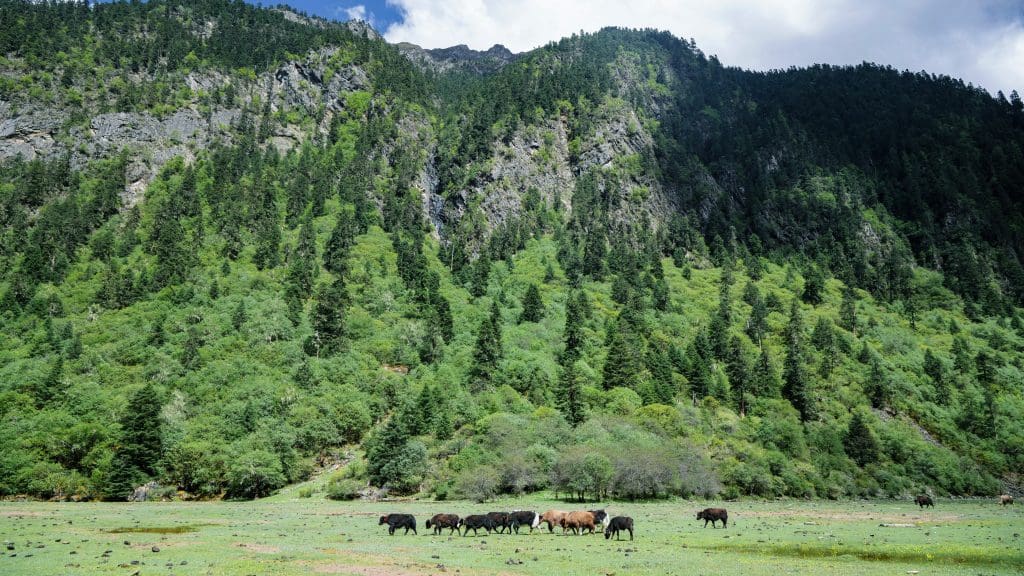
On August 13, 2026, the Center for Biological Diversity (“CBD”), an environmental nonprofit organization, filed a lawsuit against the Department of Interior (“Interior”) and USDA over their jointly administered Grazing Action Plan. The Plan, which Interior and USDA announced in 2025, is aimed at strengthening cattle production by increasing the amount of public land available for grazing. In its lawsuit, CBD argues that the Plan violates the Endangered Species Act (“ESA”) and has asked a federal court in Oregon to prevent Interior and USDA from enforcing it. While the lawsuit is currently in its early stages, the outcome may ultimately delay the finalization and implementation of grazing regulations proposed by the Bureau of Land Management in May 2026.
Background
The Bureau of Land Management (“BLM”) is an agency within Interior while the United States Forest Service (“USFS”) is a sub-agency of USDA. Both agencies are responsible for managing public lands in the United States. BLM manages around 244 million acres of land, while USFS manages around 193 million acres. Of that land, approximately 155 million acres of BLM land and around 74 million acres of USFS land are available for livestock grazing.
Activities on BLM land are managed according to the Federal Land Policy and Management Act (“FLPMA”) while activities on USFS land are governed by the National Forest Management Act (“NMFA”). Although these are separate statutes, they each direct BLM and USFS to manage public lands according to the principles of “multiple use and sustained yield.” 43 U.S.C. § 1701(a)(7); 16 U.S.C. § 1600(3). In general, the principle of multiple use and sustained yield is understood as managing public lands and their resources to meet the “present and future needs of the American people” by maintaining a regular output of various resources without impairing the “productivity of the land and the quality of the environment[.]” 43 U.S.C. §§ 1702(c), (h).
Both FLPMA and NFMA direct BLM and USFS, respectively, to develop resource management plans for each tract of public land the agency manages. 43 U.S.C. § 1712(a); 16 U.S.C. § 1604(a). These plans typically cover large areas of land and provide a framework for how the area should be managed. Grazing may only occur on public lands if either BLM or USFS has indicated in the relevant resource management plan that grazing is an allowable use of the area. If grazing is allowed in a particular section of public land, BLM and USFS then divide the land into grazing allotments. Both agencies issue grazing permits to eligible permittees to graze their livestock on the allotments.
The ESA is the primary wildlife protection law in the United States. It is jointly administered by the United States Fish and Wildlife Service (“FWS”) and the National Marine Fisheries Service (“NMFS”) (collectively, “the Services”) which are responsible for identifying species to protect under the ESA as either “threatened” or “endangered” and then identifying critical habitat for such species. While the Services are responsible for administering the ESA, all federal agencies have a duty to ensure that their actions will not jeopardize the continued existence of any protected species or result in the destruction or adverse modification of critical habitat. 16 U.S.C. § 1536(a)(2). To that end, the ESA directs federal agencies to consult with the Services over any activity an agency authorizes, funds, or carries out that the action agency determines “may affect” listed species to ensure that neither protected species or habitat will be put at risk of destruction. To learn more about the consultation process, click here to see NALC’s ESA Manual.
On October 22, 2025, Interior and USDA announced a joint “Plan for American Ranchers and Consumers,” which is described as “a suite of actions to strengthen the American beef industry.” The plan describes several actions that Interior and USDA could take to achieve the goal of increasing the nation’s cattle herd while reducing consumer costs of beef, including reopening vacant grazing allotments on federal lands. A vacant grazing allotment is an area of public land that is available for livestock grazing but for which no active grazing permit currently exists. According USFS, a grazing allotment may be vacant for any number of reasons, including conflicts with recreational use, economic viability, and seasonal or topographic restrictions. Opening vacant grazing allotments is intended to increase rangeland availability and allow ranchers to grow their herds, according to Interior and USDA.
Following the October 2025 announcement, Interior and USDA released a joint Memorandum of Understanding (“MOU”) in March 2026 to formally launch the Grazing Action Plan identified in the Plan for American Ranchers and Consumers. The MOU outlined different steps that Interior and USDA would take to achieve the goal of expanding grazing on public land, including “modernizing” both department’s grazing regulations. The same day the MOU was signed, BLM announced a new online map tool that shows the location of vacant grazing allotments on public lands. According to BLM, the purpose of the map is to help connect ranchers with information on vacant allotments that may be suitable for grazing.
Then, in May 2026, BLM proposed to overhaul its grazing regulations. Among other things, the proposed regulations would shift the scope of land health assessments from being done allotment-by-allotment to being conducted at the landscape scale, and limit public comment when making grazing decisions. Further information on BLM’s proposal is available here.
While the grazing rules have yet to be finalized, CBD has filed a lawsuit to challenge the Grazing Action Plan itself, arguing that the whole plan violates the ESA.
Legal Challenge
CBD filed its lawsuit in federal court in Oregon on August 13, 2026. The lawsuit alleges that Interior and USDA failed to comply with mandatory ESA consultation when adopting the Plan and asks the court to prevent the agencies from taking actions under the Plan or MOU until they come into ESA compliance.
According to the plaintiffs, Interior and USDA were required to initiate ESA consultation on the Grazing Action Plan and MOU because both are agency actions that “may affect” listed species. The ESA requires that any agency taking an action that “may affect” protected species must consult with the Services to ensure that the action will not jeopardize the continued existence of a protected species or destroy protected habitat. ESA regulations define the scope of agency actions requiring consultation to include “all activities or programs of any kind authorized, funded, or carried out in whole or in part, by federal agencies,” including any “actions directly or indirectly causing modifications to the land, water or air.” 50 C.F.R. § 402.02. The plaintiffs argue that both the Grazing Action Plan and the MOU are agency actions for purposes of the ESA because they will directly cause modifications to land by opening up vacant grazing allotments on public lands.
The plaintiffs next argue that consultation is required because the Grazing Action Plan and MOU “may affect” listed species. According to the plaintiffs, it has “long been known” that livestock grazing can negatively impact wildlife, citing a 1994 report from FWS which identified livestock grazing as a contributing factor to the endangerment of around 28% of listed species in the United States. The plaintiffs then note that several of the vacant grazing allotments highlighted by BLM’s online map overlap with known habitat for various listed species, including grizzly bears and gray wolves. Additionally, the plaintiffs claim that at least three vacant grazing allotments in Oregon included on BLM’s map overlap with critical habitat for the protected Oregon spotted frog and “dozens” that include streams which have been designated as critical habitat for several protected fish species. Because the Grazing Action Plan and MOU are agency actions for purposes of the ESA that “may affect” listed species, the plaintiffs argue that Interior and USDA must conduct ESA consultation for both.
Finally, the plaintiffs note that the ESA requires that once an agency initiates consultation with the Services, the agency may not make “any irreversible or irretrievable commitment of resources” related to the proposed agency action. 16 U.S.C. § 1536(d). The purpose of that requirement is to preserve the statutes quo and prevent harm to protected species and critical habitat while the consultation is ongoing. The plaintiffs argue that by issuing the Grazing Action Plan, signing the MOU, and taking actions such as “advertising” vacant livestock allotments as available for grazing prior to conducting ESA consultation, Interior and USDA have made an “irreversible or irretrievable commitment of resources” in violation of the ESA.
Going Forward
The lawsuit is currently in its earliest stages with the defendants having yet to respond to the plaintiffs’ allegations. However, courts have a history of strictly interpreting the ESA and its consultation requirements. Should the court agree with the plaintiffs that consultation is required on the Grazing Action Plan and MOU, it could ultimately delay implementation of the Plan until consultation is complete. Because BLM’s recently proposed grazing regulations were issued as part of the Grazing Action Plan, it is possible that a ruling in favor of the plaintiffs could delay finalization and implementation of the proposed rules.
To view the complaint, click here.
To view the text of the ESA, click here.
For more ESA resources from the National Agricultural Law Center, click here.