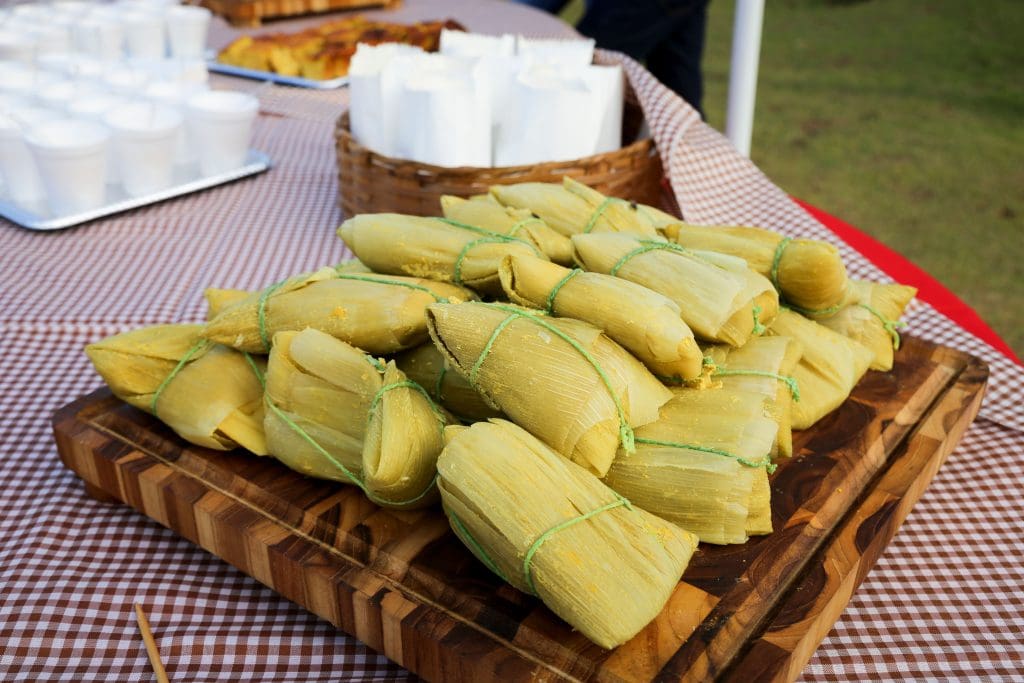
On June 4, 2026, Colorado’s governor signed into law HB26-1033, titled the “Expanding the Colorado Cottage Foods Act” and often referred to as the “Tamale Act.” This legislation expands Colorado’s Cottage Foods Act to allow products like tamales, burritos, and tortas to be sold without meeting traditional licensing and inspection requirements.
Background on Cottage Food in Colorado
Passed in 2012, the purposes of the “Colorado Cottage Foods Act” are stated as “allow[ing] for the sale and consumption of homemade foods and to encourage the expansion of agricultural sales by farmers’ markets, farms, and homebased producers.” CRS § 25-4-1614(1). The Colorado law considers homemade food to be “food that is prepared in a private home kitchen, or a commercial, private, or public kitchen, when the kitchen is not licensed, inspected, or regulated.” CRS § 25-4-1614(9)(a.5). Per the Act, these types of foods are permitted for sale only if they are sold “directly to informed end consumers.” Thus, this law created an avenue for smaller food operations, who might not have the funds to meet traditional licensing and inspection requirements, to sell their products in Colorado.
Further, cottage food producers are only permitted to sell food in Colorado and previously, could not earn more than ten thousand dollars per calendar year from their cottage food sales. The homemade foods sold under the original provisions had to be “nonpotentially hazardous” and not requiring refrigeration. Nonpotentially hazardous is defined as “any food or beverage that, when stored under normal conditions without refrigeration, will not support the rapid and progressive growth of microorganisms that cause food infections or food intoxications.” CRS § 25-4-1602(12). This means that under the 2012 law, Colorado cottage food producers were only permitted to sell foods that could be stored in a room temperature environment without a food safety threat arising. Examples of that type of food include pickled fruits and vegetables; dehydrated produce; honey; jams; flour; tortillas; and fruit empanadas.
Expanding the law
Time/temperature control for safety
The 2026 expansion of Colorado’s cottage food law allows for the sale of home-produced and packaged foods “that require time and temperature control for safety, including tamales, burritos, and tortas.” Time and temperature control for safety (TCS) foods are defined by the FDA food code as “a food that requires time/temperature control for safety to limit pathogenic microorganism growth or toxin formation.” The food code includes examples of TCS foods like animal food that requires cooking, cut leafy greens, cut tomatoes, or cut melons. Basically, TCS foods are those that must undergo some type of process via time or temperature to ensure it is safe to eat. For instance, raw chicken needs to be cooked to an internal temperature of 165°F to be safe. TCS foods have historically been prohibited from sale as cottage foods because of the increased risk associated with selling a TCS food produced in a facility that has not been inspected.
Under this new law, a Colorado cottage food producer may sell one type of TCS food but may “offer up to five variations of that one type.” For example, a cottage food producer may not sell either meat-filled tamales or burritos, but she would be able to sell 5 different meat-filled variations of tamales, such as pork, chicken, or beef. A producer will be required to report the TCS food products they sell to the Colorado Department of Public Health and Environment (CDPHE) or country, district, or regional health agencies upon request.
The expanded law also includes provisions related to the process of selling and transporting TCS food products. First, TCS food products are prohibited from being cooled and reheated before sales. Next, if the TCS product is transported to its informed end consumer, the producer is required to “maintain the food product at an appropriate holding temperature to protect the food safety during transport.” Further, transportation may not occur more than once and may not last longer than two hours.
Meat Products
Traditionally, meat or poultry products have not been permitted to be sold as cottage food. This is primarily because the driving idea behind cottage foods is to exempt certain foods from specific requirements, like inspection and licensing, that might be a barrier to smaller producers with less funds or resources. In attempting to balance this concept with food safety and public health considerations on the purchaser side, legislators have generally chosen to allow for lower-risk non-TCS products. However, in this law Colorado allows for the sale of products with meat or poultry ingredients under certain circumstances.
The expanded law requires meat or meat products that are used in preparing TCS food must 1) be inspected by the federal government and bear the mark of inspection or 2) satisfy an exemption from inspection. Colorado law defines meat or meat products as “carcasses or parts of carcasses derived from any animals used for food” and includes poultry. CRS § 35-33-103(8). Under federal law, meat and poultry products may not be sold into commerce without being inspected by the U.S. Department of Agriculture (USDA) to ensure the product is “safe, wholesome, and properly labeled.” Further, federal law requires that inspectors “mark, stamp, tag or label as ‘inspected and passed’ all such products. As indicated in (2) above, there are some exemptions to this requirement. To learn more about those exemptions, click here. Meat and poultry products cannot be exempt from federal inspection requirements by a change in state law. Ultimately, what this means is that the meat used to prepare TCS cottage food under this law must meet USDA slaughter and processing inspection requirements. Producers who purchase their meat commercially (in a grocery store or from a butcher or wholesaler), will meet this requirement without further consideration.
While the slaughter and initial processing of the animal is regulated by USDA and must be inspected, there are exceptions to inspection requirements in regards to further processing (such as cooking it for use in recipes). For example, the “retail exemption” provides that USDA inspection is not required in “operations of types traditionally and usually conducted at retail stores and restaurants.”21USC § 661(c)(2). Under this exemption, a producer selling products with meat, like tamales or burritos, who purchased meat that has already been inspected by USDA and prepares the tamales like how they are “usually conducted at retail stores” will be exempt from further USDA inspection.
However, that does not mean that it would be entirely exempt from inspection. At that point, inspection requirements typically would transfer to the state health department. For products sold under this law, Colorado has chosen to waive inspection and equipment requirements normally required in commercial kitchens used to sell food to the public. Instead, the home kitchen must be registered with the health department, and the food product is subject to sampling and inspection if it is determined to be misbranded or potentially the subject of an outbreak.
Labeling & Registration
As noted above, under the expanded rules, a producer will be required to annually register with the department. Registration will require the producer to indicate the types of food they will be selling. The department will keep an electronic registry of producers that is updated monthly, shared with local health agencies, and publicly available on the department’s website. Further, new food safety course requirements have been created for producers that sell TCS foods. These courses must include instruction on handling TCS foods and will require the producer to report on the course’s completion and their maintenance of good standing. Additionally, the expanded law includes a provision increasing the maximum gross revenue a producer can earn from the sale of cottage food products to be eligible to register. The gross revenue has expanded from $10,000 to $150,000 and will now be annually adjusted for inflation.
Labeling requirements for cottage foods in Colorado can be found at CRS § 24-4-1614(3). The expanded law will now require the label to include the CDPHE-issued registration number the producer received at registration. Further, to protect producers who create food products in their home kitchens, the law is amended to require the food’s label to state the county where it was prepared rather than the physical address. Producers are also now required to include a website address on their cottage food products where consumers can report food-borne illnesses, verify producer’s registration with the department, or report potential issues with a producer’s registration status.
Outbreak response
The Colorado Cottage Foods Act includes a provision that permits the CDPHE to respond to complaints about food-borne illness outbreaks. However, the 2026 law expands the state and local health agency’s abilities to respond. Potential responses include corrective action plans, additional food sampling tests, and additional training requirements for the producers. Further, the CDPHE or local health agency is authorized to fine a producer for violations up to $100 or may recover from the producer the cost of the investigation up to $1,000. If the CDPHE or a local health agency determines that on three separate occasions within the past year, a cottage food producer of TCS food has misbranded their products or failed to comply with TCS food requirements, the producer will be prohibited from selling that TCS product.
Cottage Food Cash Fund
Last, the expansion of Colorado’s cottage food law creates a Cottage Food Cash Fund. While the law’s language does not state a clear purpose for the fund, it does require the state to transfer money into it. Specifically, it requires the state to transfer $300,000 in FY 2026-27 from the state’s Medication Administration Cash Fund and the Assisted Living Residence Cash Fund to the Cottage Foods Cash Fund. The law does include provisions requiring that money be appropriated out of the Cottage Foods Cash Fund to CDPHE for the implementation of the act’s expansion.
Conclusion
The provision of this law related specifically to the Colorado Cottage Foods Act codified at CRS § 25-4-1614 and CRS § 35-36-102 will go into effect on January 1, 2027. The rest of the provisions went into effect upon the Governor’s signature. While Colorado is the first state to expand its cottage food laws to permit the sales of TCS foods like meat-filled tamales, it is one in a number of states that have passed provisions related to cottage foods. To learn more about other state’s laws, click here to view NALC’s Cottage Food Laws state compilation.