March 6, 2026
By Mary Hightower
University of Arkansas System Division of Agriculture
Fast Facts
- Plaintiffs want court to compel U.S. Fish and Wildlife Service to provide a final ruling
- Rollins: Proposal balances need to protect monarch, agriculture
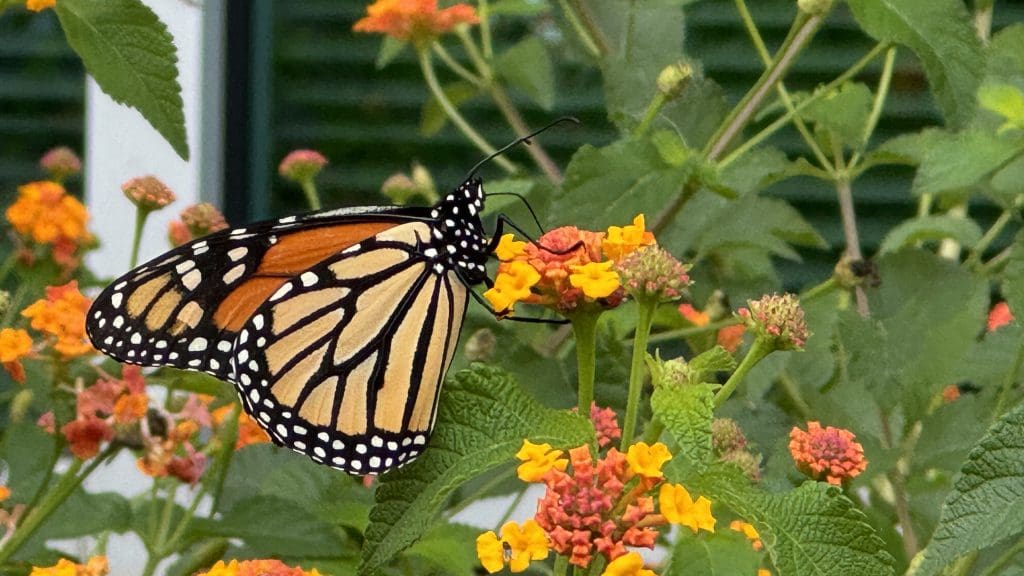
FAYETTEVILLE, Ark. — Plaintiffs that asked for protections for the monarch butterfly more than a decade ago have sued the U.S. Fish and Wildlife Service, saying the agency missed the deadline to issue a rule protecting the insect.
The lawsuit was filed Feb. 12 in the U.S. District Court for the Northern District of California by the Center for Biological Diversity and the Center for Food Safety. It also names Doug Burgum, head of the U.S. Department of the Interior, to which the U.S. Fish and Wildlife Service belongs.
According to Brigit Rollins, staff attorney for the National Agricultural Law Center, the plaintiffs claim that the U.S. Fish and Wildlife Service violated the Endangered Species Act by failing to issue a final rule in a timely manner.
In December 2024, the U.S. Fish and Wildlife Service — FWS — proposed that the monarch be added to the endangered species list. The proposal included a 90-day comment period, Rollins said.
The proposal also designated nearly 5,000 acres in seven counties in California as critical habitat, along with an economic analysis of the habitat designation, as well as two public hearings.
The plaintiffs said the deadline for issuing a “final listing rule and critical habitat designation was due a year from the proposed rule or December 12, 2025” and have asked the court to order the agencies to issue their ruling by a certain date to be determined.
The plaintiffs who filed the lawsuit are the same organizations that petitioned to label the monarch butterfly as endangered over a decade ago, Rollins said.
“I do not expect that the plaintiffs will give up on their goal of having the monarch butterfly legally protected, at least not at this time,” she said.
Reality check
Rollins said there is a lot bubbling under the surface with this proposal, not the least of which is the volume of public comments.
“FWS received more than 140,000 public comments,” she said. “With that understanding, it is very possible that this was never a rule that could be finalized in a 12-month time period.”
For comparison, a 2023 proposal to list a lizard species as endangered generated just over 18,000 comments.
“Taking into consideration that there was a change in presidential administration during that time which can cause some delay as officials change over and staff get caught up, it may be that getting the monarch proposal finalized in a timely fashion was always going to be a heavy lift,” Rollins said.
“This is a fairly complex listing decision,” she said. “Not only did it include substantial carveouts for agricultural and conservation activities, but it also left open questions of how pesticides should be treated under the final listing rule and whether any additional sites should be included in the critical habitat designation.”
To read the full article, click here.