The City of Fresno, California (“the City”) together with several Central Valley irrigation districts have asked the Supreme Court to hear a case involving water deliveries, the Bureau of Reclamation (“Reclamation”), and a property rights question that could have broad implications for farmers throughout the American West. Specifically, the City is asking the Supreme Court to consider whether Reclamation’s 2014 decision not to make contracted water deliveries to growers in the Central Valley region constitutes a Fifth Amendment “taking” of the growers’ property rights for which they must be compensated. The City argues that both federal and California state law creates a property right in the water delivered by Reclamation and that failing to deliver the water constitutes a taking. The Court of Appeals for the Federal Circuit, the federal court with exclusive jurisdiction over government contracts including water delivery contracts, growers do not hold any property rights in the water deliveries they receive from Reclamation and for that reason cannot bring a takings claim against the government. Reclamation operates various federal water delivery projects through the Western United States, including for the Colorado River and the Rio Grande. Should the Supreme Court agree to hear this matter, the outcome could impact farmers and ranchers throughout the country.
Background
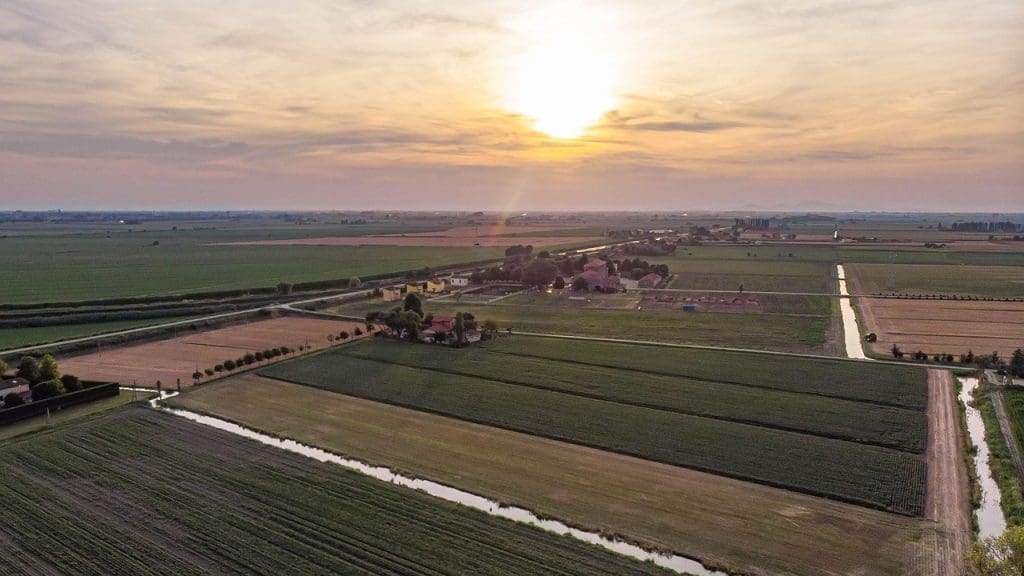
At the heart of this dispute is Reclamation’s operation of the Central Valley Project (“CVP”), the largest reclamation project authorized under the Reclamation Act of 1902. The CVP serves California’s Central Vally region, which is recognized as one of the most agriculturally productive regions in the United States. The area supports thousands of growers who produce over 250 crops, including almost half of the nation’s fruits, nuts and other table foods. To serve the area’s irrigation needs, the CVP employs twenty dams and reservoirs, eleven power plants, and hundreds of miles of major canals. The project was originally initiated by the state of California to create a water supply from the Sacramento and San Joaquin rivers. The federal government assumed operation of the CVP in 1935, and it is currently operated by Reclamation.
The CVP consists of multiple “divisions” which receive CVP water from Reclamation and then make water deliveries to irrigation districts and municipalities. Relevant here is the Friant Division, which includes the Friant Dam where Reclamation collects water from the San Joaquin River which it then stores in Millerton Lake. From there, the water is distributed to irrigation districts via the Madera and Friant-Kern Canals.
Congress passed the Reclamation Act of 1902 to help facilitate the management of water resources in the Western United States. To achieve this goal, the Reclamation Act authorized the federal government to purchase water rights from existing water-rights holders in certain areas. 43 U.S.C. § 391.
In 1939, Reclamation entered into purchase agreements with water-rights holders on the San Joaquin River (referred to as the “Exchange Contractors”). Under the terms of that purchase agreement, known as the Exchange Contract, the Exchange Contractors sold all of their San Joaquin water rights to Reclamation except for certain “reserved rights.” However, the Exchange Contract provided that during “critical years” when water was less abundant, Reclamation could use the Exchange Contractors’ reserved water rights so long as Reclamation provided the Exchange Contractors with “substitute water.”
After Reclamation entered into the Exchange Contract, it entered into a separate contract to deliver water to both municipal and private entities within the Friant Division. Known as the Friant Contract, that agreement requires Reclamation to deliver specified amounts of water to parties within the Friant Division each year, including the City and various irrigation districts. Importantly, the Friant Contract provides that its provisions are “subject to” the Exchange Contract. The Friant Contract further states that Reclamation should “not deliver to the Exchange Contractors waters of the San Joaquin River unless and until required by the terms of [the Exchange Contract].” In other words, the Friant Contract obligates Reclamation to deliver amounts of San Joaquin River water to the entities subject to that contract unless Reclamation’s contractual duties to the Exchange Contractors prevent it from doing so.
In 2014, the Governor of California declared a statewide emergency due to an on-going drought. That February, Reclamation informed the Exchange Contractors that 2014 would be a “critical year” as that term is defined in the Exchange Contract and that Reclamation would be exercising its authority to use the Contractors’ reserved rights to the San Joaquin River. In exchange, Reclamation would provide substitute water per the terms of the Exchange Contract. That same year, Reclamation informed the Friant Division that it would not be supplying them with any water that year other than the minimum needed for public health and safety. As a result, in 2016 the City together with various other entities within the Friant Division, filed a lawsuit against Reclamation, arguing that the federal government had inappropriately “taken” their property rights and requesting monetary compensation.
Previous Litigation
The City, along with several other entities within the Friant Division filed a lawsuit against Reclamation in 2016 in the Court of Federal Claims. In their complaint, the plaintiffs argued that Reclamation had breached the terms of the Friant Contract in 2014 by failing to make contracted water deliveries. The plaintiffs also claimed that the water users in the Friant Division are the beneficial owners of the water delivered by Reclamation, and that Reclamation’s actions in 2014 had constituted a takings in violation of the Fifth Amendment of the United States Constitution.
The plaintiffs’ breach of contract claim was straightforward. They pointed to the language of the Friant Contract itself which obligates Reclamation to make annual water deliveries in a certain amount. Because Reclamation failed to make those deliveries in 2014, the plaintiffs argue that the federal government had breached the Friant Contract. However, the court disagreed. In its decision, the court reviewed both the Friant Contract and the Exchange Contract. While the court agreed with the plaintiffs that the terms of the Friant Contract required Reclamation to make annual water deliveries to the Friant Division, the court also highlighted the provision in the Friant Contract that made it subject to the terms of the Exchange Contract. The court then reviewed the terms of the Exchange Contract which required Reclamation to make deliveries of “substitute water” to the Exchange Contractors in critical years when Reclamation exercises its authority to utilize the Exchange Contractors reserved rights to the San Joaquin River. The court reasoned that because the Friant Contract is subject to the terms of the Exchange Contract, in critical years Reclamation was required to satisfy the terms of the Exchange Contract before it could satisfy the terms of the Friant Contract. For that reason, the court concluded that Reclamation had not violated the Friant Contract when it failed to make the required water deliveries in 2014.
The plaintiffs next claimed that the water users in the Friant Division were the beneficial owners of rights to use water delivered through the CVP and that Reclamation’s failure to make deliveries in 2014 amounted to a constitutional taking. This argument has two components, first that the Friant Division water users hold a property right to the beneficial use of water in the San Joaquin River delivered via the CVP, and second that Reclamation’s actions in 2014 amounted to a taking in violation of the Fifth Amendment.
In general, water rights are governed according to state law. California law recognizes what are referred to as appropriative water rights. An appropriative right grants a right to use water to someone who diverts the water and puts it to a “reasonable and beneficial” use. Use of water for agricultural purposes is typically considered a beneficial use. Starting in 1914, California has required anyone seeking to secure an appropriative water right to apply for and receive a permit from the state specifying the quantity of water the user has a right to use.
The Fifth Amendment of the United States Constitution provides that the government shall not take “private property” for “public use, without just compensation.” U.S. Const. amend. V. For a plaintiff to demonstrate in court that an unconstitutional taking for which they should be justly compensated has occurred, they typically need to establish the following: (1) that the plaintiff has a private property interest; and (2) that the government’s actions have amounted to a taking of that property that can be compensated.
In reviewing the plaintiff’s claims that Reclamation’s actions in 2014 had constituted a taking, the court first considered whether the Friant Division water users had a property right in the water Reclamation delivered to them. The court found that they did not because the plaintiffs had not received a permit from California granting them rights to use the water. Instead, Reclamation held permits for the water it delivered to the Friant Division. In response, the plaintiffs pointed to a decision issued by the California State Water Resources Control Board (“SWRCB”), the California state agency with authority to make decisions for the state regarding water appropriation, which states that “the United States holds all water rights acquired for project purposes in trust for project beneficiaries who by use of the water on the land will become the true owners” of the water rights. The plaintiffs claim that this decision from SWRCB indicates that Reclamation has only “nominal” title to the water it delivers to the Friant Division and that the end users of the water are the actual owners of the water rights. However, the court notes that a separate SWRCB decision provides that “[t]itle to the water rights under the permits is held by [Reclamation].” For those reasons, the court concluded that the plaintiffs did not have property rights to the water delivered by Reclamation via the CVP and that Reclamation’s actions in 2014 did not constitute a taking.
Following their loss at the Court of Federal Claims, the plaintiffs appealed the decision to the U.S. Court of Appeals for the Federal Circuit. There, the appellate court upheld the lower court’s decision, finding both that Reclamation had not breached the Friant Contract and that Reclamation had not committed a taking against the plaintiffs. The plaintiffs have now asked the Supreme Court to review the case.
Going Forward
In its request to the Supreme Court, the plaintiffs specifically ask the Court to consider whether Reclamation’s failure to deliver water to the Friant Division in 2014 constitutes a taking under the Fifth Amendment. While it is currently unclear whether the Court will agree to hear the case, its decision either way could have broad implications for water users who rely on deliveries from Reclamation. Should the Court not take the case, the status quo will remain the same and water users such as those in the Friant Division who do not have an explicit right to use the water delivered to them may not be entitled to compensation in years when Reclamation does not deliver their water. Should the Supreme Court agree to hear the case, it’s ruling could set the standard not only for water users in California, but for water users throughout the West the rely on water delivery facilities operated by Reclamation. As water supplies in the Western United States fluctuate due to drought and other factors, a potential Supreme Court ruling on this matter could have impacts throughout the region.
To read the plaintiffs’ petition to the Supreme Court and the court decisions from the Court of Federal Claims and the Federal Circuit Court of Appeals, click here.
To read the text of the Reclamation Act, click here.
For more National Agricultural Law Center resources on water law, click here.