In late May 2026, the Supreme Court accepted a settlement agreement to end a 13-year lawsuit between Texas and New Mexico over use of water from the Rio Grande. The settlement calls for reduced groundwater pumping along the river and clarifies the amount of water apportioned to each state. The lawsuit was initially filed in 2013 by the state of Texas which claimed that New Mexico was over-pumping groundwater and depleting water supplies in the Rio Grande. Texas claimed that New Mexico was in violation of the 1938 Rio Grande Compact (“the Compact”) which divides the Rio Grande between Texas, New Mexico and Colorado. After over a decade of litigation, and a consent decree that the Supreme Court rejected, the settlement agreement has brought the case to an end and established new rules for water sharing in the Rio Grande.
Background
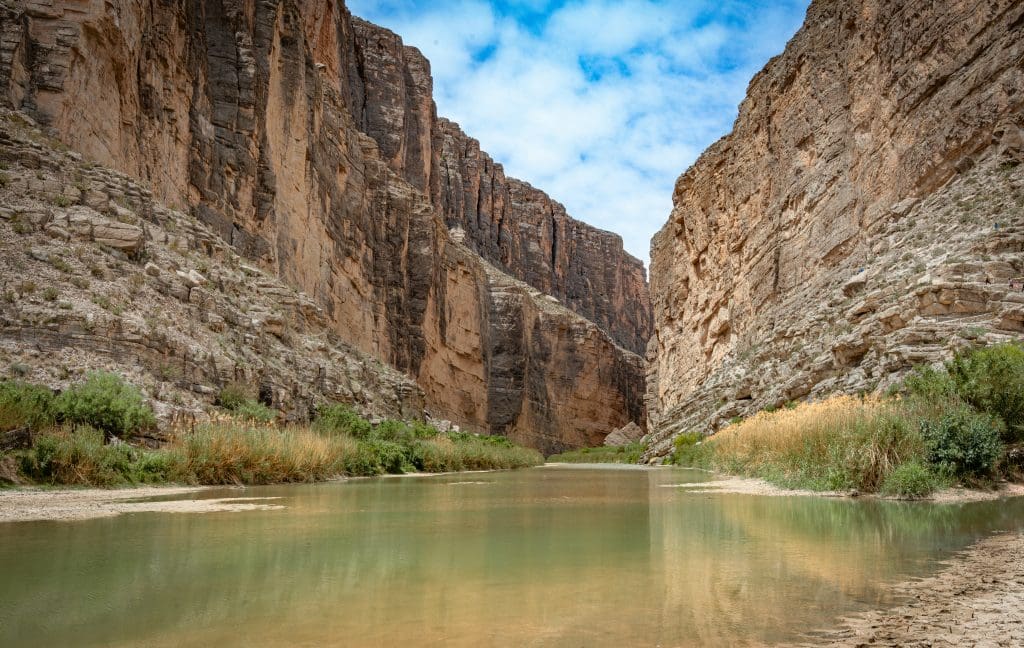
The Rio Grande flows from the San Juan Mountains in southern Colorado, through New Mexico, and into Texas where it runs along the border between the United States and Mexico before reaching the Gulf Coast. Its entire basin encompasses more than 180,000 square miles and in the United States, the Rio Grande irrigates up to 178,000 acres of land while providing electric power to various communities.
Agreements over how to divide the Rio Grande go back to the start of the twentieth century when Mexico and the United States signed the Mexican Treaty of 1906 where the United States agreed to deliver up to 60,000 acre-feet of water to Mexico each year after completion of the Elephant Butte Reservoir (“the Reservoir”) located in New Mexico. The United States then tasked the recently created Bureau of Reclamation (“Reclamation”) to complete and operate the Rio Grande Project (“the Project”), including the Reservoir, which was intended by Congress to deliver Rio Grande water to irrigators in New Mexico and Texas. By 1919, the Project was complete and capable of fulfilling both the United States’ obligation to Mexico and of serving water users in New Mexico and Texas. From 1921 onward, Reclamation delivered enough water to New Mexico and Texas to irrigate around 155,000 acres with roughly 57% of those acres located in New Mexico and the remaining 43% located in Texas. This split was formalized in 1937 by separately drafted agreements known as the Downstream Contracts.
In 1938, the states of Colorado, New Mexico and Texas entered into the Rio Grande Compact to apportion the waters of the Rio Grande Basin above Fort Quitman, Texas which is located along the Mexican border roughly 70 miles southeast of El Paso. The Compact imposed two delivery obligations on the states. First, Colorado must deliver water to the New Mexico state line, with exact amounts determined by certain hydrologic conditions. Second, New Mexico must deliver water to the Reservoir, with exact amounts also determined by hydrologic conditions. However, below the Reservoir, the Compact relies on the Project to ensure all other water deliveries. While the Compact does require maintenance of the 57%/43% split between New Mexico and Texas, the Compact failed to specify how much water would be subject to that split.
The first decade after the Compact was ratified saw an abundance of surface water in the Rio Grande Basin. However, by the mid-twentieth century, a period of prolonged drought had set in. To compensate for reduced surface water, entities in New Mexico began to pump groundwater at increasing levels drawing water away from the mainstream of the Rio Grande. Ultimately, this reduced flow meant that Reclamation had to release more water from the Reservoir to satisfy water delivery agreements in Texas and Mexico. To estimate how much water would be available for release, Reclamation developed a mathematical equation known as the “D2 Equation.” Since 1980, Reclamation has relied on the D2 Equation to determine the amount of water that users in New Mexico and Texas may receive each year. This method largely satisfied water users through the end of the twentieth century, a relatively wet period in the Rio Grande Basin. However, drought conditions returned around the onset of the twenty-first century and in at least two years, 2003 and 2004, water users in Texas did not receive their contracted water.
In 2013, Texas filed a lawsuit against New Mexico, claiming that excessively groundwater pumping in New Mexico was unlawfully depriving Texas of the amount of Rio Grande water apportioned to it under the Compact. Because the Supreme Court has jurisdiction over lawsuits filed by one state against another, Texas filed its case directly with the Court. In its complaint, Texas asked the Court to declare its rights to water in the Rio Grande consistent with the Compact, require New Mexico to deliver water to Texas in compliance with the Compact and to cease and desist actions that interfere with Project operations. In response, New Mexico asked the Court to also declare its rights to the Rio Grande consistent with the Compact and require Texas to halt any actions in violation of the Compact. The federal government also intervened in the case to request that the Court require New Mexico to halt its groundwater pumping, arguing that New Mexico’s activities threatened Reclamation’s ability to make contracted for water deliveries through the Project.
The federal government was allowed to intervene in the lawsuit and the case was assigned to a Special Master. Due to their high level of complexity, most interstate disputes over shared water resources are referred to Special Masters who are appointed by a court to conduct hearings, gather evidence, and make recommendations to the court over how the matter should be resolved. In 2024, the Special Master recommended to the Supreme Court that it accept a consent decree reached between the litigating states on how to divide the Rio Grande. However, the Court rejected that decree after concluding that the federal government had “distinctly federal interests” to pursue under the Compact that would have been disposed of by the proposed agreement over the government’s objections. Specifically, the Court found that the federal government had valid legal claims under the Compact because the government, through Reclamation, had legal duties to deliver water to both Texas and Mexico. The 2024 proposed consent decree would have incorporated New Mexico’s groundwater pumping into the Compact over Reclamation’s objections. Because that agreement would not have resolved the federal government’s interests, the Court rejected the proposed decree. More information on that ruling is available here.
Now, in 2026, the Supreme Court has accepted the consent decree agreed to by all parties, including the United States. The Court’s acceptance brings the case to a close and establishes new rules for water-sharing on the Rio Grande.
Consent Decree
The consent decree recently approved by the Supreme Court is largely similar to the 2024 proposed consent decree but resolves the flaws that lead the Court to reject that initial proposal. Overall, the consent decree clarifies Texas’ apportionment under the Compact through use of the newly developed Effective El Paso Index (“the Index”) which tracks the movement of water below the Reservoir. This approach ties Texas’ apportionment to hydrologic conditions measured along the river. Crucially, the consent decree resolves the claims of all parties, clearing the way for the Supreme Court to approve the settlement.
Key to the consent decree is the Index which has two main components, the Index Obligation and the Index Delivery. The Index Obligation represents the amount of water that Texas would receive from New Mexico during the so-called D-2 Period, the period during the mid-twentieth century when the D-2 Equation was developed. The Index Delivery, on the other hand, reflects the actual amount of water Texas should receive under the Compact based on measurements taken on the Rio Grande. In other words, the Index Obligation is the baseline of what Texas would have received during the D-2 period of water abundance while the Index Delivery represents the how much water is actually available in a given year. While ideally those numbers will match, the consent decree contemplates that in reality, the Index Obligation and the Index Delivery will rarely be the same. The consent decree compensates for this by providing that New Mexico may under-deliver water to Texas so long as the under-delivery does not exceed certain limits. If those limits are breached, New Mexico must undertake certain water management activities, such as a transfer of water from users in New Mexico to users in Texas, to remedy the shortfall. Similarly, if New Mexico over-delivers water to Texas past a certain limit, the consent decree allows Texas to make water transfers back to New Mexico.
Finally, the Index will use the 57%/43% split to determine how much water Texas will receive. After calculating the amount of water available according to the Index, the consent decree requires New Mexico to receive 57% of Rio Grande water released from the Reservoir while Texas will receive the remaining 43%.
According to the report from the Special Master, which the Supreme Court has accepted, the consent decree is valid because it resolves all claims raised by the disputing parties and is consistent with federal law. In initiating this lawsuit, Texas asked the Court to declare its rights to the Rio Grande consistent with the Compact, and order New Mexico to deliver Rio Grande water in compliance with the Compact and cease all actions that interfere with the federal government’s operation of the Rio Grande Project. The Supreme Court has concluded that the consent decree resolves these claims because the Index uses the D2 period as a baseline to determine how much water Texas should get and then employs a method of water measurement to ensure that Texas receives 43% of water actually released from the Reservoir. The consent decree then requires New Mexico to compensate Texas with additional water deliveries should under-delivery exceed certain limits using the D2 measurement to determine when under-delivery has occurred.
Similarly, the Supreme Court agreed with the Special Master that the consent decree resolves New Mexico’s claims. In response to Texas’ lawsuit, New Mexico asked the Court to declare its rights to Rio Grande water consistent with the Compact and to require Texas to cease any Compact violations. The Court concludes that the consent decree resolves these claims because the Index provides a way to measure and apportion Rio Grande water released from the Reservoir according to the 57%/43% split contemplated in the Compact and because it allows transfers of water to occur if New Mexico over-delivers water past a particular limit with over-delivery determined by the D2 baseline measurement.
Lastly, the consent decree is consistent with federal law because it is consistent with the Compact. Water compacts like the Rio Grande Compact are agreed to by states and ratified by Congress. Once Congress ratifies a water compact, it becomes federal law. The consent decree is consistent with the Compact because it uses the same index method to measure and apportion water below the Reservoir as the Compact uses to measure and apportion water above the Reservoir, because it retains the 57%/43% split incorporated into the Compact through the Downstream Contracts, and because it uses the D2 period as a baseline. For those reasons, the Special Master and Supreme Court concluded that the consent decree is consistent with federal law and should be approved.
While the 2024 proposed consent decree was rejected because it failed to resolve claims raised by the federal government, the current decree has been agreed to by all litigating parties, clearing the way for the Supreme Court to accept the agreement and resolve the case.
Conclusion
By accepting the consent decree, the Supreme Court has resolved a years-long dispute between Texas and New Mexico. The resolution will bring changes to how water released from Elephant Butte Reservoir is apportioned between the two states, ideally resulting in clarity for water users in the region. Many of the most vital waterways in the western United States are governed according to interstate compacts that were approved before the middle of the twentieth century when water was more abundant in the region. As states work to accommodate the drier conditions that have become prevalent during the twenty-first century, it is likely that the Supreme Court will be asked to resolve additional interstate disputes over water.
To read the Special Master’s report and consent decree approved by the Supreme Court, click here.
To access the full docket associated with this case, click here.
For more National Agricultural Law Center resources on water law, click here.