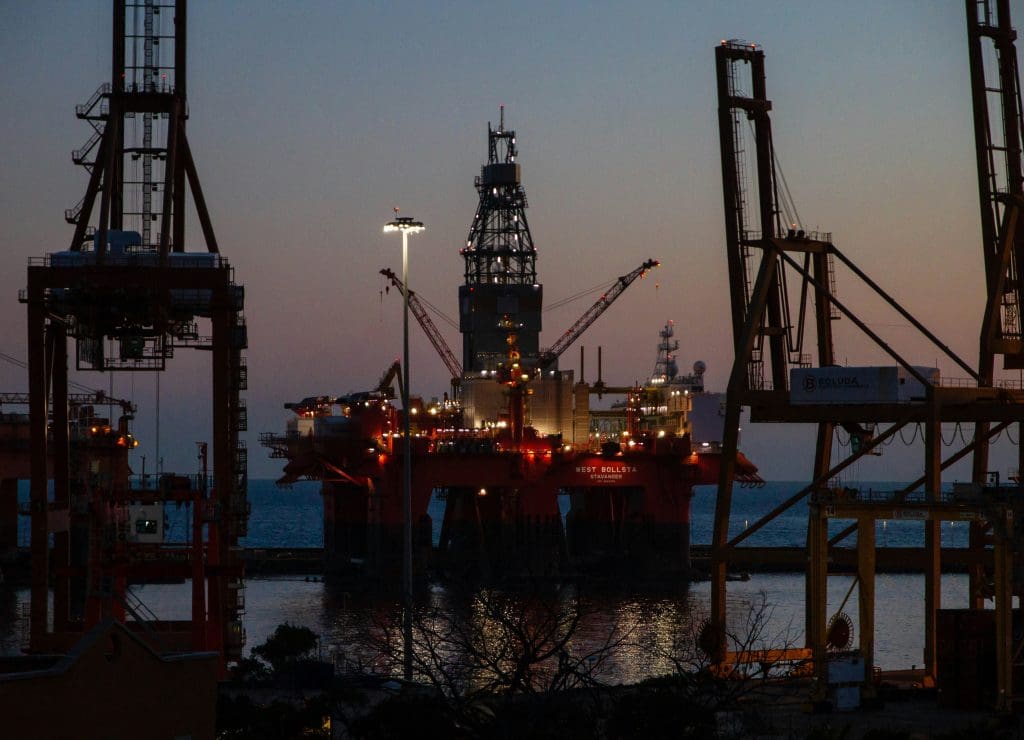
The Department of Interior has announced that on March 31, 2026, the Endangered Species Committee (“the Committee”) will meet to discuss waiving Endangered Species Act (“ESA”) requirements for oil and gas production activities off the shores of Alabama, Florida, Louisiana, Mississippi and Texas. The Endangered Species Committee, better known as the “God Squad,” consists of six permanent members of the federal government and has the unique authority to exempt federal actions from ESA requirements. Days after the meeting was announced, the Center for Biological Diversity filed a lawsuit seeking to prevent the meeting from happening, claiming both that Interior failed to comply with the public notice requirements of the ESA and that the conditions necessary to convene the Committee have not been met. If the Committee ultimately votes to exempt oil and gas, it would allow those actions to proceed without needing to comply with the ESA.
Background: The ESA & The “God Squad”
The ESA was enacted in 1973 for the purpose of conserving species at risk of extinction and the ecosystems on which those species depend. 16 U.S.C. § 1531(b). The ESA is jointly administered by the United States Fish and Wildlife Service (“FWS”) and the National Marine Fisheries Service (“NMFS”) (collectively, “the Services). It is their responsibility to create and maintain a list of protected species that are classified as either “threatened” or “endangered” depending on the threat level the species is facing. 16 U.S.C. § 1533. Once a species is protected under the ESA, it becomes a violation of the law to “take” a member of that species. “Take” is defined as “to harass, harm, pursue, hunt, shoot, wound, kill, trap, capture, or collect, or to attempt to engage in any such conduct.” 16 U.S.C. § 1536(b). The ESA prohibits both intentional take of a species, and unintentional take that occurs incidentally to an otherwise legal activity.
Along with prohibiting take of protected species, the ESA requires federal agencies to ensure that their actions do not “jeopardize the continued existence” of any listed species. 16 U.S.C. § 1536(b). The term “jeopardize the continued existence” is defined as “an action that reasonably would be expected, directly or indirectly, to reduce appreciably the likelihood of both the survival and recovery of a listed species[.]” In other words, the ESA requires federal agencies to ensure that their actions will not make it significantly more likely that a protected species will go extinct. To do so, the ESA directs agencies to consult with the Services over any action the agency authorizes, funds, or carries out to ensure that jeopardy will not occur. 16 U.S.C. § 1536(b). For more information on how this consultation process is carried out, click here to view NALC’s ESA Manual.
Historically, courts have tended to enforce the ESA’s duty to consult and prohibition on take rather strictly. In 1978, only five years after the ESA became law, the Supreme Court issued its decision in Tennessee Valley Authority v. Hill, 437 U.S. (1978). That case concerned the construction of a dam on the Little Tennessee River. Congress had authorized funding for the dam in 1976 and its primary purpose was to bring electricity to thousands of homes. In 1973 a small fish known as snail darter was discovered in the Little Tennessee. It was distinct from other darter fish and the only population of its kind known to exist which led to it being listed as an endangered species in 1975. By the time the snail darter was listed, construction of the dam was almost complete. However, completing the dam would inundate the portion of the Little Tennessee River where the snail darter was located and likely cause the species to go extinct.
The plaintiffs in Tennessee Valley Authority v. Hill filed a lawsuit in 1976 seeking to prevent completion of the dam on the grounds that doing so would violate the ESA by directly causing the extinction of an endangered species. In response, the defendants argued that the ESA should not apply to the dam because the project had begun before the Act had been adopted. The case ultimately reached the Supreme Court which found that completing the dam would violate the ESA because it would result in the likely extinction of an endangered species. While the Court recognized the hardship of halting construction of a nearly completed dam that had cost tens of millions of dollars, it ultimately concluded that the language of the ESA preventing federal agencies from jeopardizing the continued existence of listed species reflect Congress’s decision o halt and reverse the trend toward species extinction, whatever the cost.” This decision is considered the seminal ESA case and is regarded as having set the tone for how courts enforce the statute.
Following the Supreme Court’s ruling in Tennessee Valley Authority v. Hill, Congress amended the ESA to create the Endangered Species Committee. The Committee has the authority to allow the extinction of listed species by exempting federal actions from the requirement that they do not jeopardize the continued existence of a listed species. 16 U.S.C. § 1536(e)(2). The Committee is composed of seven members: the Secretary of Agriculture, the Secretary of the Army, the Chairman of the Council of Economic Advisors, the Administrator of the Environmental Protection Agency, the Secretary of Interior, the Administrator of the National Oceanic and Atmospheric Administration, and one individual from each State affected by the action that the Committee is considering. At the time it was created, the Committee was described as a function of “last resort.”
Agencies may apply to the Committee to receive an exemption for a specific agency action that the Services have completed consultation on and concluded that the action will result in unavoidable jeopardy of a listed species. To apply, the action agency must include a description of the consultation process between itself and the Services over the action it is seeking to exempt from ESA requirements, and a statement describing why the action cannot be modified or altered to avoid causing jeopardy of a listed species. 16 U.S.C. § 1536(f). The application must be submitted no later than 90 days after the consultation over the proposed action has concluded. 16 U.S.C. § 1536(g)(1)(2)(A). Applications are submitted directly to the Secretary of Interior who must make an initial determination as to whether the application should be heard by the whole Committee. The Secretary will recommend the application to the Committee if is determined that the federal agency submitting the application has carried out its ESA consultation duties “in good faith” and made a “reasonable and responsible effort” to develop and consider modifications to its proposed action which would avoid jeopardizing listed species. 16 U.S.C. § 1536(g)(3)(A). If the Secretary cannot make that determination, then the application will be formally denied. 16 U.S.C. § 1536(g)(3)(B).
If the Secretary of Interior approves the application, it will be delivered to the full Committee for review. After receiving an application, the Committee will have 30 days to make a final decision. 16 U.S.C. § 1536(h)(1). For an application to be approved, at least five members of the Committee must determine that: (1) there are no reasonable alternatives to the proposed agency action; (2) the benefits of the proposed action clearly outweigh the benefits of conserving listed species; (3) the proposed action is of regional or national significance; and (4) the federal agency seeking ESA exemption has not already made an irreversible or irretrievable commitment of resources towards carrying out the proposed action. 16 U.S.C. § 1536(h)(1)(A). Additionally, if the Committee approves an application, it must also establish mitigation measures to minimize the adverse effects of the agency action on listed species, including live propagation, transplantation, and habitat acquisition. 16 U.S.C. § 1536(h)(1)(B).
Since being established in 1978, the Committee has only considered three applications. In 1979, the Committee met to consider whether to exempt completion of the dam at the center of Tennessee Valley Authority v. Hill and allow jeopardy of the snail darter. That same year, the Committee also considered a request to allow construction of another dam in whooping crane habitat. Ultimately, the Committee refused to exempt the snail darter from ESA protection, but granted exemption to the dam being built in whooping crane habitat after a court settlement established a multi-million dollar trust to maintain habitat for the cranes. Most recently, the Committee met in 1991 and voted to exempt 13 timber sales in the Pacific Northwest from ESA requirements for the endangered northern spotted owl. Should the Committee convene in March of 2026, it would be the first time it has met in 35 years.
Meeting Announcement & Legal Challenge
The Office of the Secretary of Interior published a notice of meeting announcement in the Federal Register on March 16, 2026, to announce an upcoming meeting of the Committee scheduled for March 31, 2026. The announcement is brief and notes only that the Committee will consider an ESA exemption for “oil and gas exploration, development, and production activities in the Gulf of America.” The notice includes a YouTube link where members of the public can watch the meeting live. Beyond that language and the link, the notice did not include further information.
On March 18, two days after the notice was published, the environmental organization, Center for Biological Diversity (“CBD”), filed a lawsuit in federal court to challenge the decision to convene the Committee. According to CBD, the decision violated both the public notice requirements for Committee meetings outlined in the text of the ESA and represents an unlawful attempt to convene the Committee.
CBD claims that the notice made in the Federal Register does not comply with mandatory public notice requirements. Under the ESA, before an application for exemption can be heard by the full Committee, it must first be submitted to the Secretary of Interior who is tasked with making an initial determination. Once the Secretary receives an application, the ESA requires that he “publish notice of receipt of application in the Federal Register[.]” 16 U.S.C. § 1536(g)(2)(B)(ii). The notice must include “a summary of the information contained in the application and a description of the agency action with respect to which the application for exemption has been filed.” 16 U.S.C. § 1536(g)(2)(B)(ii). The notice filed by the Secretary of Interior in the Federal Register on March 16 does not include any mention of an application for exemption, nor has the Secretary made a previous announcement in the Federal Register that an application was received. Additionally, no information about an application has been made available to the public. Because the Secretary of Interior has not provided public information about an exemption application, CBD argues that the Secretary has violated mandatory public notice requirements outlined in the ESA.
Additionally, CBD claims that the Secretary of Interior is unlawfully convening the Committee. Under the ESA, the Committee may only convene to discuss a proposed federal action that the Services have reviewed during consultation and determined is likely to jeopardize the continued existence of protected species, and the jeopardy cannot be mitigated. 16 U.S.C. § 1536(g). The notice for the upcoming meeting published in the Federal Register does not indicate that the Committee will be considering a specific agency action. Rather, the notice states that the Committee will consider “oil and gas exploration, development, and production activities” in the Gulf. The notice also does not mention a specific consultation process that concluded in a jeopardy finding which cannot be mitigated. In 2025, the Services each completed a programmatic consultation to analyze the effects of oil and gas activities in waters off the coast of Alabama, Florida, Louisiana, Mississippi and Texas. While the consultation concluded that several species are likely adversely affected by such activities, it did not result in a finding of jeopardy that could not be mitigated. Instead, the consultation identified activities that the Services found would mitigate the adverse effects. Because the Secretary of Interior failed to identify a specific agency action which the Services had consulted on and determined was likely to result in unavoidable jeopardy to a protected species, CBD argues that the meeting has been called in violation of the ESA.
Based on those claims, CBD has asked the court to prevent the Committee from meeting on March 31 without satisfying the public notification requirements and the other substantive ESA requirements for convening the Committee. Additionally, CBD has asked the court to prevent the Committee to issue any ESA exemptions without fully complying with the ESA.
Conclusion
Currently, it is unclear whether the Committee will convene on March 31, 2026. CBD has asked the court to issue a temporary restraining order to prevent the meeting from being held. More information on temporary restraining orders and when a court may issue one is available here. Should the court grant CBD’s request, it would prevent the meeting from occurring in March although the meeting could still be held at a later date. It also remains unclear whether the Committee would vote to exempt oil and gas production activities in the Gulf from ESA requirements or what such an exemption would look like. The Committee has only considered three applications for exemption in its nearly 50-year history, and of those three applications, it has only granted two. Whatever the outcome of this latest attempt to convene the Committee, it will likely have an impact on how the Committee operates going forward.
To read CBD’s complaint, click here.
To read the text of the ESA, click here.
For more National Agricultural Law Center resources on the ESA, click here.