By Mary Hightower
University of Arkansas Division of Agriculture
Fast facts
- Arkansas continues to lead U.S. in bankruptcy filings
- Pittman: ‘The number of Chapter 12 bankruptcies filed this quarter underscores the significant financial pressures facing U.S. agriculture’
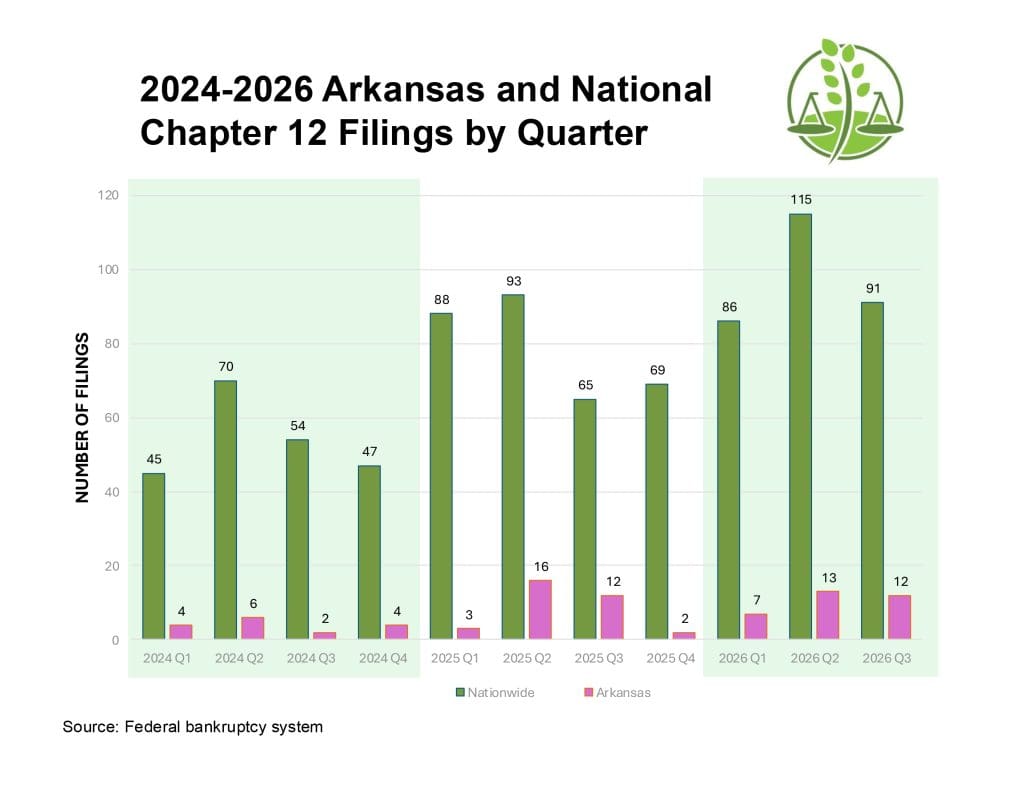
Chapter 12 bankruptcies from 2024-2026 (UADA image)
FAYETTEVILLE, Ark. — Arkansas led the nation in Chapter 12 bankruptcy filings in the third quarter of 2026, its 12 cases reflective of the difficult economic conditions in agriculture, according to data released by the federal courts.
“That number is twice the six filings reported in Iowa, the next-highest state,” said Harrison Pittman, director of the National Agricultural Law Center. “So far this year, 32 agricultural operations in Arkansas have filed for Chapter 12 bankruptcy protection, highlighting the financial challenges facing the state’s agricultural sector.”
Nationwide, Chapter 12 bankruptcy filings are also up significantly. According to federal court data, 292 Chapter 12 cases have been filed so far in 2026, nearly 19 percent more than the 246 filed during the first three quarters of 2025. In the third quarter alone, 91 Chapter 12 bankruptcy filings were recorded nationwide.
Chapters of the federal bankruptcy code each describe different processes to allow debtors to settle financial obligations. Chapter 12 of the federal Bankruptcy Code, introduced in 1986 at the height of the 1980s farm crisis, was designed with farms in mind. It’s an alternative to a Chapter 7 filing, under which a farm’s assets are liquidated to pay creditors.
“The number of Chapter 12 bankruptcies filed this quarter underscores the significant financial pressures facing U.S. agriculture,” Pittman said. “However, these filings tell only part of the story. As the NALC DEBT Project demonstrates, the full scope of financial distress becomes clearer when agricultural bankruptcies filed under other chapters of the bankruptcy code are also considered.”
The DEBT project, Pittman said, compiles federal bankruptcy data for agricultural operations that have filed under either Chapter 11 or Chapter 12, giving a more complete picture of the scope of the issue. The additional data can help to identify changes over time, geographic patterns, and emerging financial challenges affecting agricultural operations.
Nationwide Chapter 11 bankruptcy filings increased 11.5 percent during the first three quarters of 2026 compared to the same period in 2025. According to the most recent federal court data, 7,623 Chapter 11 cases were filed in the first three quarters of 2026, up from 6,838 during the same period in 2025. Elizabeth Rumley, NALC senior staff attorney, noted that while Chapter 11 filings are not exclusive to agricultural businesses, the DEBT Project demonstrates that they can include agricultural operations and provide a more complete picture of financial distress in the agricultural sector.
To read the full press release, click here.