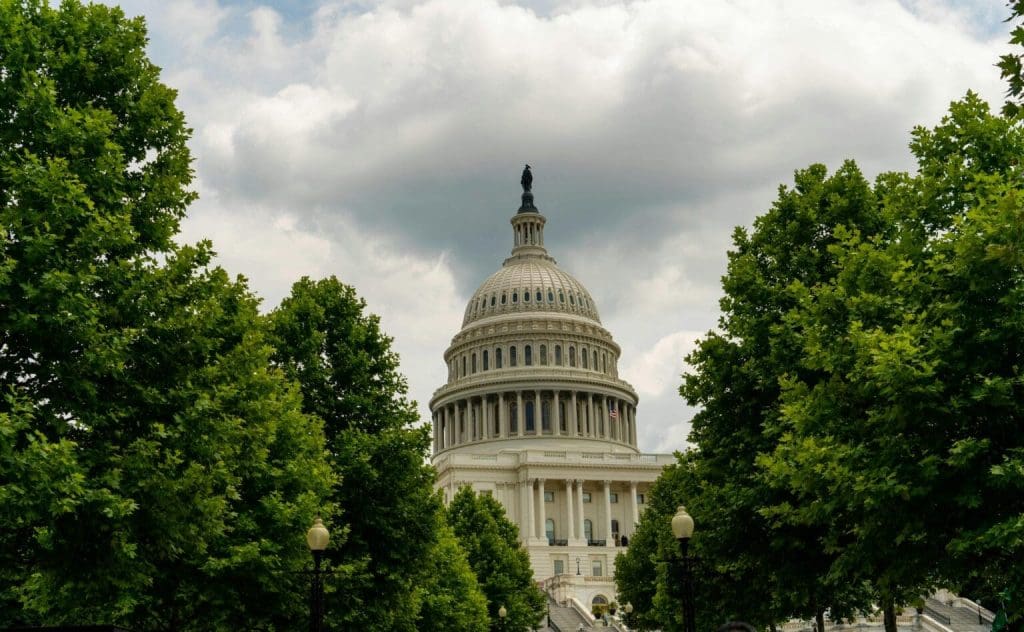
On July 4, 2025, President Trump signed an omnibus appropriations bill into law that funded the federal government for the remainder of Fiscal Year 2025. It has been informally referred to as the “One Big Beautiful Bill Act,” or “OBBBA.” This legislation passed through Congress using the reconciliation process and included several legislative components that are usually included in the Farm Bill. Specifically, the OBBBA amended several provisions related to the Supplemental Nutrition Assistance Program (SNAP). This article will discuss those provisions.
Background on Nutrition’s Inclusion in Reconciliation
Reconciliation is an expediated process that allows Congress to pass budgetary goals without the typical three-fifths majority vote in the Senate. Because of this, reconciliation is most often used to pass partisan policy priorities when one party has a majority in both chambers of Congress and the White House. For example, reconciliation was used to pass the Affordable Care Act in 2010, the Tax Cuts and Jobs Act in 2017, and the Inflation Reduction Act in 2021.
Reconciliation is a two-step process that starts with Congress’ adoption of a budget resolution. This resolution will include reconciliation instructions to one or more Congressional committees. Specifically, the instructions direct the committee to amend current budget-related laws to achieve the goals of the budget resolution. As the Congressional Research Service states, it “reconcile[s] current law with the fiscal objectives of the budget resolution.” For the OBBBA, both the House Committee on Agriculture and the Senate Committee on Agriculture, Nutrition and Forestry were directed to cut their budgets by a certain amount. As a result of this, both Chambers’ Agriculture committees made specific amendments to SNAP – the federal nutrition assistance program that acts as a supplement to an individual or family’s income to assist in the purchasing of nutritious food. To learn more generally about the reconciliation process, click here to view Congressional Research Service Report, “The Reconciliation Process: Frequently Asked Questions.”
Thrifty Food Plan
The first SNAP provision that was addressed in the OBBBA is the Thrifty Food Plan (TFP). The TFP, according to USDA, is the “cost of groceries needed to provide a healthy, budget-conscious diet for a family of four.” Specifically, the TFP determines the amount of SNAP benefits a household can receive by estimating the cost of feeding a nutritious, practical and cost-effective diet prepared at home for a reference family. The makeup of the “reference family” is an adult male and female ages 20-50 and two children ages 6-8 and 9-11. The TFP uses the measuring unit “market baskets” to calculate the maximum benefits a household can receive. “Market baskets” are defined as the weekly amount of food and beverages that support a healthy diet. Prior to 2021, market baskets have only been adjusted according to inflation and have remained “cost neutral.” This meant that other than the adjustments for inflation, the market basket value was equal to the value it was when the TFP was established in 1975. However, in 2021, under direction from the 2018 Farm Bill and the Biden Administration’s Executive Order 14002, the USDA re-evaluated the TFP according to other factors. These factors included current food prices, food composition data, consumption patterns, and dietary guidance. As a result, at that time USDA announced that the cost of market baskets for the reference family was $835.37 –a 21.03% increase compared to previous TFP calculations. This meant that for the fiscal year 2022, the average SNAP benefit increased by $36.24 per person, per month. Under the 2018 Farm Bill, a similar re-evaluation based on these factors was required to occur every 5 years.
The OBBBA permits the re-evaluation of market baskets based on “current food prices, food composition data, consumption patterns, and dietary guidance.” However, it also includes a prohibition against the Secretary of the USDA increasing the cost of the TFP on such re-evaluation. Thus, it requires that adjustments to the TFP be “cost-neutral” and only according to inflation.
The provision requiring TFP adjustments to remain cost-neutral will have no effect on the number of benefits that SNAP participants receive currently. In other words, it will not reduce the current market basket cost. However, future market basket costs can only be adjusted after considering inflation, rather than other circumstantial factors.
A similar provision was included in the 2024 Farm Bill proposal that last year advanced through the House Committee on Agriculture but ultimately failed to reach a vote on the House floor. To learn more about that proposal and the two Senate proposals, click here to read NALC article “Farm Bill 2024: Themes in the Proposed Nutrition Titles.” For more information on the 2021 TFP update, click here to read NALC article “USDA Updates the Thrifty Food Plan.”
Work Requirements
The OBBBA modifies work requirements for SNAP participants. Currently, there are two categories of work-related requirements – the general work requirements and the able-bodied adult without dependents (ABAWD) work requirements. Ther general work requirements apply to everyone participating in the SNAP program, while the additional ABAWD requirements only apply to a subset of participants.
SNAP participants between the ages of 16-59 who are able to work are typically required to meet the general work requirements. As stated by the USDA, those work requirements include “registering for work, participating in SNAP Employment and Training (E&T) or workfare if assigned by your state SNAP agency, taking a suitable job if offered, and not voluntarily quitting a job or reducing your work hours below 30 a week without a good reason.” However, there is a list of exemptions that exclude a participant from required compliance with the work requirements. The list of exemptions can be found here, and include circumstances like taking care of a child under six or an incapacitated person and the inability to work due to a physical or mental limitation. Unless a participant qualifies for an exemption, however, they are required to meet the general work requirements.
For a specific subset of participants, additional requirements are in place. Specifically, current law also requires that people ages 18-54 that do not meet an exemption are required to meet an additional requirement in order to receive SNAP benefits for more than three months in three years. That is the second category – ABAWD work requirements. These requirements include “either work (including volunteering and in-kind work) or participat[ion] in a work program, or any combination, for 80 hours a month, or participat[ion] in workfare for the number of hours assigned each month. However, there are also exemptions from the ABAWD requirements. Currently, they include inability to work due to physical or mental limitation; being pregnant; having someone under 18 in your SNAP household; if you are excused from the general work requirements; a veteran; experiencing homelessness; age 24 or younger and in foster care on your 18th birthday. Individuals who are exempted are not required to fulfill the ABAWD work requirements, although they may still be required to fulfill the general requirements.
The OBBBA makes key changes to the ABAWD work requirements. Specifically, the changes are related to the permitted exemptions. First, it raises the age limit to 65 when previously the age limit was 54. This means that individuals between the ages of 18-65 must comply with the additional ABAWD work requirements. Secondly, the OBBBA lowers the exemption age for households with dependents to only apply to households with children under the age of 14. Previously, the exemption extended to households with someone under 18. The effect of this will require that households with dependents age 14 or older will be required to comply with the ABAWD requirements.
If participants are subject to the ABAWD work requirement and fail to meet it, they will lose benefits after three months. To get benefits reinstated, they must meet the ABAWD work requirements for 30 days. Otherwise, a participant will have to wait three years to get another three months of permitted SNAP participation.
Exemptions for Noncontiguous States
Another modification the OBBBA made to the rules regarding the ABAWD work requirement is permitting the USDA Secretary to have the authority to waive the requirements for noncontiguous States with unemployment rates that are at or above 1.5 times the national unemployment rate. The legislation defines a noncontiguous state as a state that is not one of the contiguous 48 states or D.C. and does not include Guam or the U.S. Virgin Islands. Under this new exemption rule, the state agency in Hawaii or Alaska that administers SNAP will request the exemption from the USDA, and the Secretary will determine if their request is made in good faith.
Under current law, the Secretary of Agriculture is permitted to offer any of the 50 states an exemption from compliance with ABAWD requirements if it is determined that the state or an area in the state has 1) an unemployment rate of over 10 percent or 2) does not have a sufficient number of jobs to provide employment for the individuals. Under the OBBBA, the sufficient jobs exemption condition will be terminated and replaced with the noncontiguous state provision. Thus, the Secretary of Agriculture will still be permitted to offer an ABAWD exemption to all 50 states if they have an unemployment rate of over 10 percent. However, the Secretary will only be allowed to offer an exemption to Alaska and Hawaii for an unemployment rate that is at or above 1.5 times the national unemployment rate. In effect, this means that Alaska and Hawaii will be eligible for waivers at a lower rate of unemployment than other states. It is also important to note that the language of both the OBBBA and current law clarifies that the exemption is only awarded at the discretion of the Secretary, and will not be automatically implemented if a state’s unemployment rate hits a certain percentage.
The noncontiguous state exemption is permitted until December 31, 2028, but per the legislation, may not be renewed beyond that date. The Secretary may end the exemption prior to the expiration date if the Secretary determines that the state agency failed to comply with reporting requirements or failed to make continued good faith efforts toward compliance with the ABAWD requirements.
Matching Funds Requirement
One of the most controversial portions of the OBBBA’s nutrition title is the creation of a cost-sharing requirement for states participating in SNAP. Currently, the federal government pays fully for the cost of SNAP benefits, and the USDA and states split the costs of administering the program. However, under the OBBBA, states will be required to share in the costs of SNAP benefits if their “payment error rate” is greater than or equal to a certain percentage. According to the USDA, the payment error rate “measures the accuracy of each state’s eligibility and benefit determinations.” This new cost-share plan is titled the “state quality control incentive,” and will work to encourage participating states to reduce error rates. Beginning in fiscal year 2028, if a state’s payment error rate is less than 6 percent, then the state will pay 0 percent, and the Federal government will pay 100 percent of the costs of benefits. If the payment error rate is between 6 and 8 percent, then the federal government will pay 95 percent, and the state will pay 5 percent of the cost of benefits. If the payment error rate is between 8 and 10 percent, the federal government will pay 90 percent, and the state will pay 10 percent of the cost of benefits. If the payment error rate is equal to or greater than 10 percent, then the federal government will pay 85 percent, and the state will pay 15 percent of the cost of benefits.
For fiscal year 2028, a state can choose to use its payment error rate from 2025 or 2026; however, for fiscal year 2029 and beyond, the payment error rate for the third fiscal year preceding the fiscal year being calculated will be used. For example, in fiscal year 2029, the payment error rate of 2026 will be used. Additionally, OBBBA includes delayed implementations for states with higher fiscal year 2025 and 2026 payment error rates. If a state’s 2025 payment error rate multiplied by 1.5 is equal to or above 20 percent, then the cost-share requirements will not go into effect until fiscal year 2029. If the state’s payment error rate for 2026 multiplied by 1.5 is equal to or above 20 percent, the implementation date will be fiscal year 2030. To view your state’s 2024 payment error rate, click here.
Impact of cost-share
Depending on the individual state’s payment error rate, the cost-share policy might have wide reaching impacts on the number of citizens able to participate in SNAP. This is because many states might not have the funds available to pay for their portion of the cost-share. Prior to the OBBBA’s enactment when the legislation was being considered in the House of Representatives, several state leaders publicly spoke out about the impact the cost-share requirement would have on their state. For example, a press release from the Pennsylvania Department of Human Services and the Pennsylvania Department of Agriculture said that the plan would “threaten food assistance for nearly two million Pennsylvanians.” In 2024, Pennsylvania had a payment error rate of 10.76 – if the cost-share determination was made off the 2024 number, then Pennsylvania would be required to pay 15 percent of the cost of SNAP benefits.
Under the OBBBA, the cost-share requirement goes into effect in fiscal year 2028 for most states, and cost share percentages will be based on either 2025 or 2026 payment error rates. Knowing this, many state leaders are now trying to decrease their payment error rates. Other leaders are preparing to reshape their budget to account for the loss of federal dollars. For example, Louisianna’s Treasurer John Fleming stated that they will need to “trim back some [other programs] in order to afford the programs necessary to support the people of Louisiana.” On the other hand, Alabama’s Commissioner of Agriculture and Industries Rick Pate stated that Alabama is “probably not going to generate additional dollars to fund additional SNAP benefits,” but that it will be “all hands on board” to work on getting Alabama’s rate down to under 6 percent.
Administrative costs
Additionally, separate from the cost-sharing requirement for the funding of SNAP benefits, the OBBBA also includes a provision that would reduce the federal reimbursement rate for SNAP administrative costs to 25%. Currently, the federal government and states evenly split the cost of the administration of SNAP; however, under the OBBBA, states will now be required to pay 75% of the cost of administering the program starting in fiscal year 2027.
SNAP-Ed
The OBBBA makes the most dramatic modification to SNAP-Ed. The Supplemental Nutrition Assistance Program Education (SNAP-Ed) is a federal grant program that partners with state and local organizations to fund projects that teach nutrition education and obesity prevention programs to SNAP eligible individuals. Specifically, the USDA states that SNAP-Ed helps people “make their SNAP dollars stretch, teaches them how to cook healthy meals, and lead physically active lifestyles,” and that it promotes programs that are “consistent with the most recent Dietary Guidelines for Americans.” In the OBBBA, the federal funding for SNAP-Ed is eliminated. Thus, without money to pay for the federal grant program, SNAP-Ed is effectively terminated.
Alien Snap Eligibility
Lastly, the OBBBA dramatically restricts SNAP eligibility for a certain population. Currently, SNAP benefits are only available for US citizens and certain lawfully present non-citizens. The OBBBA limits SNAP eligibility further by only permitting aliens admitted for permanent residence, persons who have been granted the status of Cuban and Haitian entrants, and individuals who lawfully reside in the United States in accordance with a Compact of Free Association. This limitation will effectively remove eligibility for categories of non-citizens that had previously been eligible, including humanitarian statuses like refugees and asylees.
Conclusion
The OBBBA made several impactful changes to the Supplemental Nutrition Assistance Program. While the impact of changes like the cost-share requirement and the TFP re-evaluations might have a delayed effect, interested stakeholders should be aware of the coming ramifications. On Wednesday, July 23, NALC will publish an article highlighting other provisions of the OBBBA and its impact on agriculture.